
From Small-Batch Customization to Mass Production: How Can Brands Test New Fragrances More Safely?
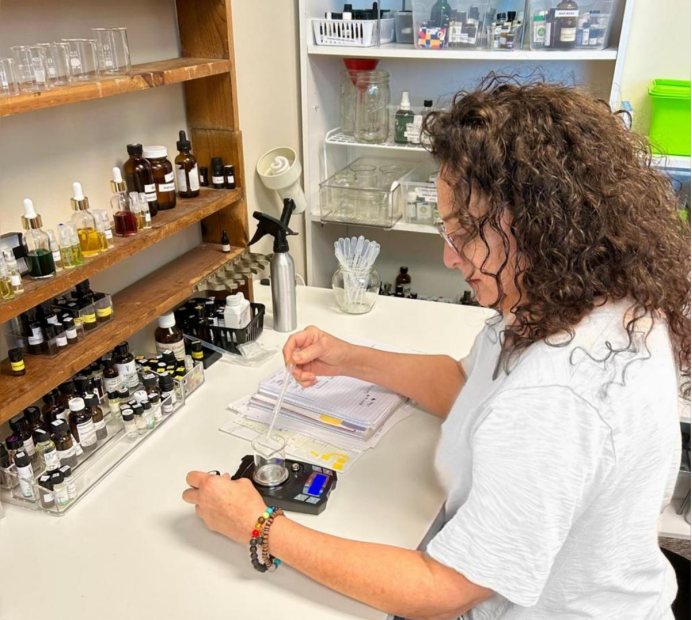
For brands developing new fragrance products, the biggest challenge is often not a lack of good product ideas.
What truly gives brands pause is the prospect of mass-producing a product before it has been market-tested, thereby incurring inventory risk.
A new fragrance requires upfront investment in everything from the scent profile and bottle design to the packaging. If a large quantity is produced at once and market feedback falls short of expectations, the brand may face issues such as excess inventory, tied-up capital, and difficulties in making subsequent adjustments.
Consequently, an increasing number of brands are turning to a more flexible approach to new product development:
Small-batch production → Market testing → Adjusting based on feedback → Gradual production scaling
This method helps brands strike a more reasonable balance between innovation and inventory risk.
I. Why Does New Fragrance Development Often Lead to Inventory Risk?
A complete fragrance product involves more than just the scent itself.
It also encompasses scent R&D, the bottle or container, caps and accessories, labels, outer packaging, gift boxes, and the manufacturing process.
This means that before the product officially launches, the brand has already incurred significant R&D and supply chain costs.
If multiple scents, sizes, and packaging versions are developed simultaneously, the number of SKUs increases further.
Therefore, for brands launching new products, a larger number of products does not necessarily equate to greater market opportunity.
Without market validation, a large inventory can actually become a burden on the brand's growth.
II. Why Test New Products Before Scaling Up Production?
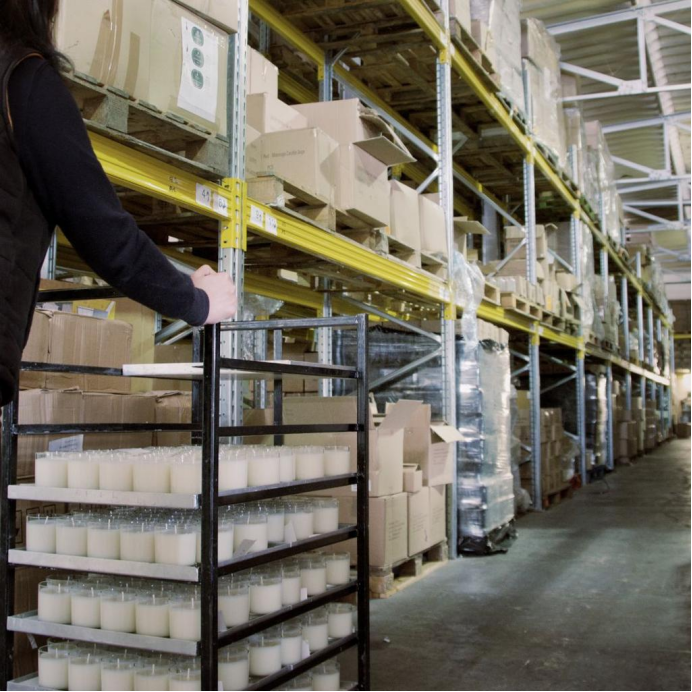
Market testing helps brands answer several critical questions:
Which scent profiles do consumers truly prefer?
Which product designs are more popular?
What price points are most acceptable?
Where is demand strongest?
Are consumers willing to make repeat purchases?
It is difficult to answer these questions definitively based solely on internal judgment.
Therefore, a more prudent model for new product development is:
Step 1: Define the product concept, including brand positioning, target audience, and product direction.
Step 2: Develop samples and finalize the scent, product, and packaging designs.
Step 3: Produce a small batch and enter the target market with limited quantities.
Step 4: Gather market feedback and evaluate performance based on sales data, customer feedback, and channel performance. Step 5: Optimize the product—adjust the fragrance profile, packaging, or product mix based on actual feedback.
Step 6: Scale up production—gradually increase production volume only after confirming the product's market potential.
This approach is better suited for new product development.

III. Is a lower MOQ always better?
This is a common misconception brands have when selecting a manufacturer.
A lower MOQ is not necessarily better.
What truly matters is whether the manufacturer can offer flexible MOQ options tailored to the brand's different stages of growth.
For example:
When a brand first tests a new product, small batches are needed.
Once the product enters the market and feedback is received, medium-sized batches are required.
After the product becomes a steady seller, large-scale production is necessary.
Therefore, an ideal supply chain should support the progression from small-batch testing to medium-batch growth and finally to large-scale production...
...without the brand needing to switch suppliers every time they scale up production.
IV. Which brands are particularly well-suited for small-batch customization?
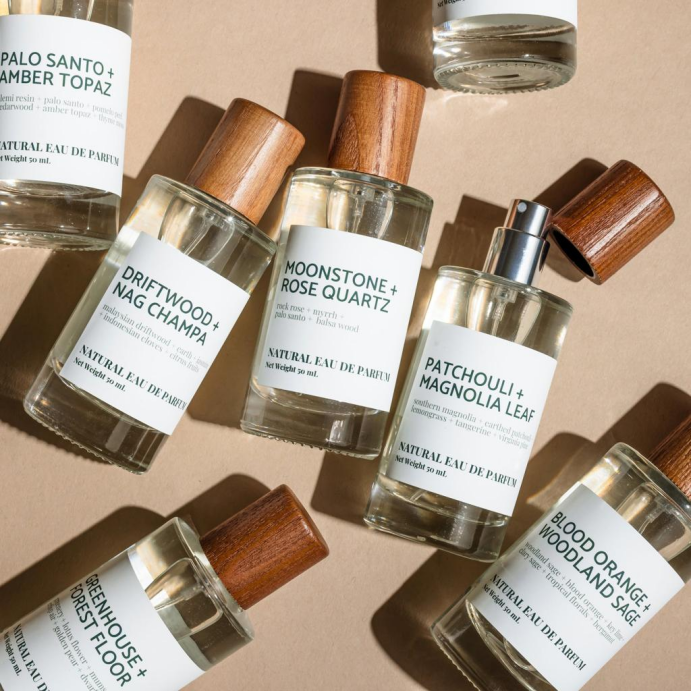
Newly established fragrance brands: Lacking stable sales data, they need to control initial inventory levels.
Direct-to-consumer (DTC) brands: They need to test various products and fragrance profiles via online sales.
Cross-border e-commerce brands: Consumer fragrance preferences vary by country, necessitating regional market testing.
Established brands developing new product lines: Even with an existing product portfolio, they may need small-batch testing to explore new product directions.
Brands preparing to enter new markets: For instance, a brand primarily selling in Europe might be preparing to enter the US or Southeast Asia.
Consumer preferences differ across markets; therefore, testing before scaling up offers greater flexibility than committing to large-scale production right away.
V. Small-batch production is about more than just "producing less."
The true value of small-batch customization lies in the benefits it offers brands: Lower costs for market experimentation—avoiding heavy inventory investment before product viability is proven.
Greater flexibility in product adjustments—allowing for rapid changes to fragrance profiles, packaging, or designs.
Reduced inventory pressure—minimizing tied-up capital and enabling faster new product testing.
Helping brands obtain real market feedback more quickly; thus, flexible MOQ arrangements are effectively part of a brand's new product development strategy.
VI. What supply chain support is required for the complete development of a new fragrance product? When developing new products, many brands often have to source fragrance suppliers, perfume manufacturers, candle makers, packaging providers, and gift box specialists separately.
While this approach gets the job done, it often drives up communication costs; a comprehensive OEM/ODM partnership model, by contrast, integrates all these stages.
These stages include: fragrance R&D, product design, packaging material selection, custom packaging, sample development, small-batch production, quality control, mass production, and global delivery.
This allows brands to focus their energy on brand building, marketing, and sales growth rather than coordinating multiple suppliers.
VII. From Small-Batch Testing to Mass Production
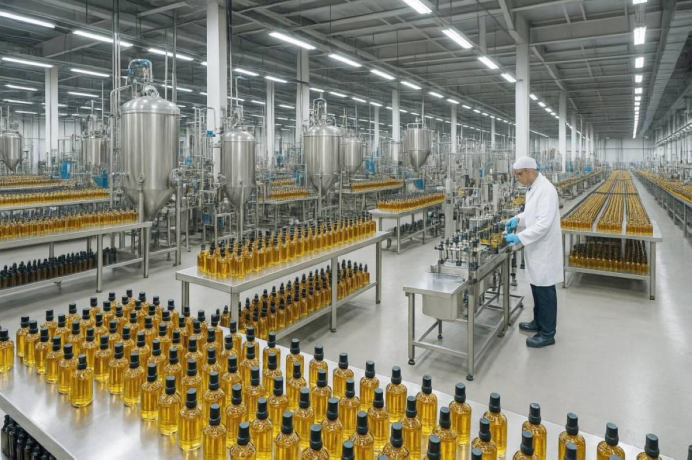
A mature new product development process does not remain at the small-batch stage indefinitely.
The ideal approach follows this progression:
01 Small-batch: Validate the product's market potential.
02 Medium-batch: Increase production volume once the product gains initial market acceptance.
03 Mass production: Transition to long-term, large-scale production once sales stabilize.
This ensures the brand's production plan stays aligned with market demand.
For manufacturers, this means not only helping the brand launch its first batch of products but also supporting its continued growth.
VIII. How Does BILA Help Brands Reduce New Product Development Risks?
With over 30 years of experience in the fragrance industry, BILA leverages an international team of perfumers to provide brands with one-stop OEM/ODM services—from R&D to mass production.
We support brands with:
Fragrance R&D, product design, custom bottle and container design, packaging and gift box development, sample approval, flexible MOQ production, quality control, mass production, and global delivery.
Our product range includes:
Perfumes, scented candles, liquid diffusers, smart diffusers, car air fresheners, and fragrance gift sets.
For brands developing new products, we place special emphasis on early-stage market testing needs.
Brands can start by commissioning small-batch production of core products; once real market feedback is obtained, they can gradually scale up production based on actual sales performance.
This helps brands strike a more rational balance between product innovation, capital investment, and inventory risk. IX. A Truly Excellent Supply Chain Goes Beyond Just Lowering MOQs
When selecting a manufacturer, brands shouldn't simply ask, "What is your minimum order quantity?"
They should also ask, "Can you continue to support me once my product takes off?"
A supply chain partner truly suited for a brand's long-term growth needs to possess:
Agile new product development capabilities, small-batch customization capabilities, stable quality control, multi-category production capabilities, mass production capabilities, and experience serving international markets.
Because what a brand truly needs isn't just a single order.
It needs long-term supply chain support that spans everything from new product testing and market growth to mass production.
FAQ | Frequently Asked Questions
1. What does MOQ mean for fragrance products?
MOQ stands for Minimum Order Quantity; the specific MOQ varies depending on the product, packaging solution, and level of customization.
2. Why do new brands need small-batch production?
Since there is usually insufficient market data before a new product launches, small-batch production allows brands to test consumer feedback before deciding whether to scale up, thereby reducing initial inventory pressure and the costs associated with market trial and error.
3. Is a lower MOQ always better for new brands?
Not necessarily. Brands should focus on *flexible* MOQs—meaning the manufacturer's ability to provide support for small-batch, medium-batch, and mass production as the brand evolves through different stages of growth.
4. Does BILA support small-batch customization?
Yes, BILA offers flexible MOQ customization; specific minimum quantities are determined based on product type, packaging solutions, and customization requirements.
5. Can BILA provide comprehensive customization services?
Yes, BILA offers one-stop customization support, covering everything from fragrance R&D, product design, and packaging customization to sample development, small-batch production, mass production, and global delivery.
6. Can multiple fragrance products be customized simultaneously?
Yes. Brands can develop a range of products—such as perfumes, scented candles, liquid diffusers, car air fresheners, smart diffusers, and fragrance gift sets—in parallel based on their product roadmap, allowing them to gradually build a complete fragrance product portfolio.
Conclusion | Making New Product Testing More Agile and Brand Growth More Robust
For fragrance brands, the biggest risk in new product development isn't a lack of creativity; it is investing too much inventory and capital before the product has been validated by the market. Consequently, the workflow of "small-batch testing → market feedback → product optimization → mass production" is emerging as a more agile approach to new product development. A quality manufacturing partner should do more than simply fulfill a single order;
they should provide continuous support for a brand's growth—spanning everything from initial samples and small-batch market testing to full-scale mass production.
BILA aims to serve as a long-term supply chain partner for global fragrance brands. By offering services ranging from agile new product development (with flexible MOQs) to comprehensive OEM/ODM customization, we help brands test new products with reduced risk and achieve steady, scalable growth.
Text/Photos: BILA
Copyright and Right of Interpretation held by
BILA Biotechnology (Guangzhou) Co., Ltd.