
Why do some people find a specific perfume, scented candle, or diffuser product fresh, while others find it overpowering? Why might one person detect floral notes while another primarily notices woody or spicy undertones?
To consumers, this may simply seem like a matter of personal preference. However, for brands, the reality involves a complex interplay of factors, including fragrance formulas, raw material characteristics, product bases, diffusion methods, and usage environments.
Therefore, when a brand develops a fragrance product, the real challenge isn't just finding a "pleasant scent"; it is ensuring that the scent remains relatively stable and distinct across different products and usage scenarios, while staying true to the brand's positioning.
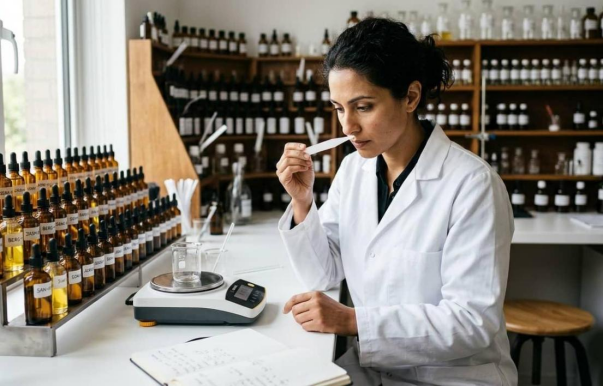
I. Scent perception is inherently subjective
Unlike colors, which are perceived consistently by almost everyone, scents are not.
Individual olfactory sensitivity, life experiences, dietary habits, and even one's physical state at the time can influence how a scent is perceived.
Take a rose scent, for example: some might first notice soft floral notes; others might detect a distinct sweetness; while some might pick up on green, fruity, or powdery nuances.
This doesn't mean the fragrance profile itself is "unstable"; rather, it highlights the subjective nature of the sense of smell.
For brands, the key is to ensure that—despite individual differences among consumers—the product still conveys a relatively clear core aroma. This requires professional fragrance development and testing.
II. Different products alter the perceived scent
Many brands overlook a crucial point:
Using the same fragrance formula does not guarantee identical aromatic performance across different products.
For instance, the same fragrance profile might yield different results when used in perfumes, scented candles, reed diffusers, car air fresheners, or aroma diffusers.
Perfumes require balancing evaporation rates and the evolution of top, middle, and base notes within an alcohol-based system; scented candles involve considerations of wax composition, burning temperature, and scent throw; and liquid diffusers require managing solvents, reeds, and evaporation speeds.
Consequently, a professional fragrance factory does far more than simply "add fragrance to a product." Instead, adjustments must be made to ensure compatibility with the product base, intended method of use, and desired diffusion performance.
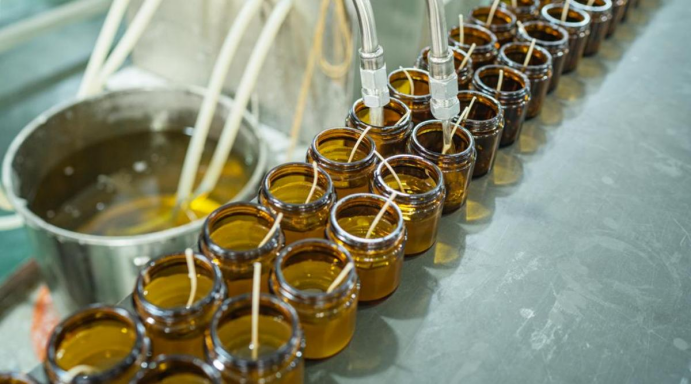
III. The True Test for a Factory: "Scent Adaptation Capability"
This is a crucial factor for brands when selecting a fragrance supplier. If a brand merely needs to source off-the-shelf scents, a supplier offering dozens or hundreds of options might suffice.
However, the situation changes entirely when a brand seeks to create its own signature scent.
From the initial development phase, constant evaluation is required: What is the sensory impression? Does it align with the brand identity? Does it still smell good when incorporated into the actual product? Is the diffusion intensity appropriate? Are the top, middle, and base notes harmonious? Can consistency be maintained across production batches?
This implies that fragrance development encompasses more than just "blending"; it also involves subsequent product adaptation and stability control.
Especially for companies aiming to build brand recognition, a truly refined scent must successfully transition from the laboratory to the actual product, and finally to the consumer.
IV. Why Do Professional Fragrance Factories Require Repeated Testing?
Fragrance development is rarely a one-step process.
During R&D, perfumers adjust the scent profile based on the client's target market, product positioning, consumer preferences, and reference samples.
For instance, a client might say, "I want it to feel more sophisticated."
This statement cannot be directly translated into a standard formula.
R&D specialists must determine the specific adjustments needed—such as reducing sweetness, enhancing woody notes, altering the floral ratio, or modifying the overall diffusion characteristics.
Consequently, a brand's vague impressions must be translated by professional R&D teams into actionable formula adjustments.
This explains why experienced fragrance factories typically conduct multiple rounds of testing during development, rather than simply offering a catalog of ready-made scents for the client to choose from.
For brands seeking to create a signature scent, this R&D capability is often far more important than the sheer number of available scents.
V. From Consumer Perception to Factory R&D: A Complete Value Chain
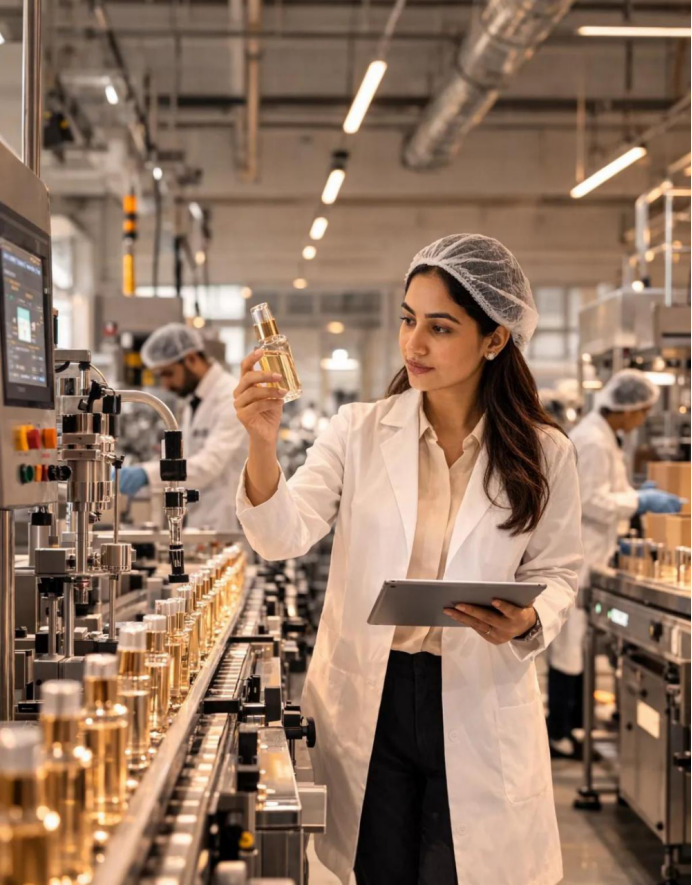
Ultimately, the consumer's experience boils down to a simple question: "Does this smell good?"
At the factory level, however, the process involves multiple stages.
It spans from the selection of raw fragrance materials and the design of the scent formula to adaptation for specific product systems and, finally, real-world usage testing. For scented candles, the focus must be on the fragrance release during burning;
For liquid diffusers, the focus is on the evaporation rate and scent throw (diffusion range);
For perfumes, the focus lies in the evolution of top, middle, and base notes after spraying, as well as longevity.
Therefore, a truly professional fragrance supply chain must integrate fragrance creation expertise, product R&D capabilities, and manufacturing prowess.
VI. When seeking the "best fragrance factory in China," don't just look at the number of scent options
Many brands, when searching for the best fragrance factory in China, prioritize product pricing, MOQs (Minimum Order Quantities), and the variety of available scents.
While these factors are certainly important, brands seeking customization should also investigate the following:
Does the factory have a professional team of perfumers? Can they develop scents tailored to the brand's positioning? Can they adapt formulas for different product types? Do they have stable production and quality control systems? Can they support the entire process from R&D and prototyping to mass production?
Ultimately, what fragrance products offer consumers is not merely a bottle or a candle, but a tangible, sensory experience.
Fragrance R&D capability determines whether a brand can truly transform a concept into a product that resonates with consumers.
How does BILA help brands develop fragrances for diverse products?
We are not only a manufacturer with over 30 years of experience at the source; we also provide comprehensive, customized implementation solutions and flexible, low-MOQ production support for global brands launching new products. Our portfolio spans categories such as scented candles, perfumes, liquid diffusers, and smart diffusers. We manage the entire process—from fragrance R&D, product design, and custom bottle/packaging creation to compliant manufacturing and delivery.
Why global clients choose to partner with us (Our core strengths):
✨ Flexible MOQs: From Customization to Mass Production
We support small-batch orders, helping brands minimize market testing risks and inventory pressure, while also meeting mass production needs to drive market growth.
✨ End-to-End Customization Services
We offer one-stop services covering everything from fragrance R&D, custom packaging materials and visual design, to customs clearance and shipping that meet global compliance standards.
✨ International Perfumer Team Driving Brand Growth
Our team of international perfumers helps brands accurately capture cutting-edge fragrance trends, enhance market competitiveness, and achieve sustainable growth. ✨ Over 30 Years of Industry Experience & Authoritative EU Certifications
Our products and services reach more than 40 countries worldwide, complying with EU regulations and global industry standards such as IFRA, REACH, and CE.
✨ Artistic Fragrance Meets Eco-Consciousness
We create collectible, heirloom-quality artistic fragrances that offer multi-functional utility, championing the use of pure plant-based ingredients for a natural, healthy lifestyle.
Whether you are a brand owner, retailer, wholesaler, distributor, cross-border e-commerce seller, independent online store operator, corporate client, or trader—and whether you are seeking a reliable supply chain partner or looking to scale up production capacity for existing projects—we stand ready as your steadfast and dependable supply chain backbone. Contact us today.
FAQ
Q1: Why does the same fragrance scent smell different across various products?
Differences in product bases, diffusion methods, and usage environments mean that a single fragrance profile must be specifically adapted for each product type.
Q2: Can brands request the development of exclusive fragrance scents?
Yes; professional fragrance factories can develop custom scents tailored to a brand's positioning, target audience, and reference profiles.
Q3: How many rounds of testing are typically required for fragrance development?
It usually involves multiple rounds of testing and adjustment; the exact number depends on the complexity of the scent and the client's final requirements.
Q4: What are the most important factors to consider when choosing a fragrance factory?
Beyond price and MOQ, it is crucial to evaluate fragrance R&D capabilities, product adaptation expertise, production stability, and the ability to provide comprehensive customization services.
Conclusion
The same fragrance may evoke different sensations for different people; however, a professional brand ensures that consumers experience a clear, consistent brand identity whenever and wherever they encounter the product.
BILA Fragrance Customization Factory—infusing a brand's unique philosophy and character into a sensory fragrance experience, serving as the most trusted supply chain partner for global brands.
Text/Photos: BILA
Copyright and Right of Interpretation held by
BILA Biotechnology (Guangzhou) Co., Ltd.