
What factors actually influence how a fragrance performs from the initial sniff through to continued use?
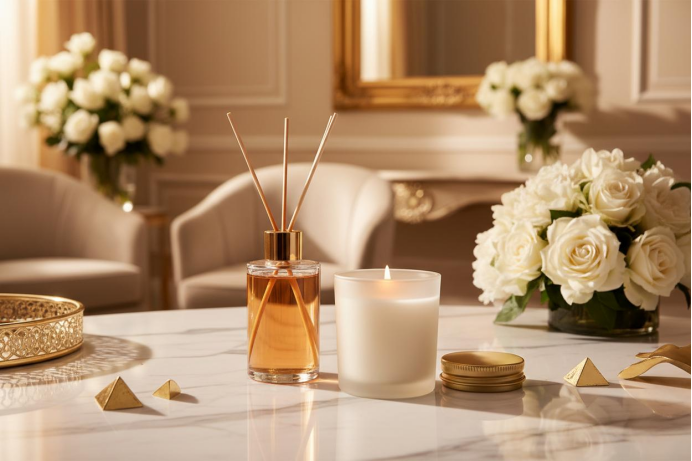
Many consumers have had this experience:
When first opening a scented candle, the fragrance is very noticeable.
When first unboxing a reed diffuser, the scent fills the entire room.
But after using it for a while, the feeling changes:
"Why doesn't it seem as fragrant as it was at the start?"
For consumers, this might just be a matter of usage experience.
But for brands and buyers, this actually involves a range of issues, including product development, fragrance release, formula compatibility, and the usage environment.
Many people instinctively wonder: "Wasn't enough fragrance oil added?"
In reality, that isn't necessarily the case; the performance of a fragrance product is never determined solely by "concentration levels."
Is a stronger scent always better?
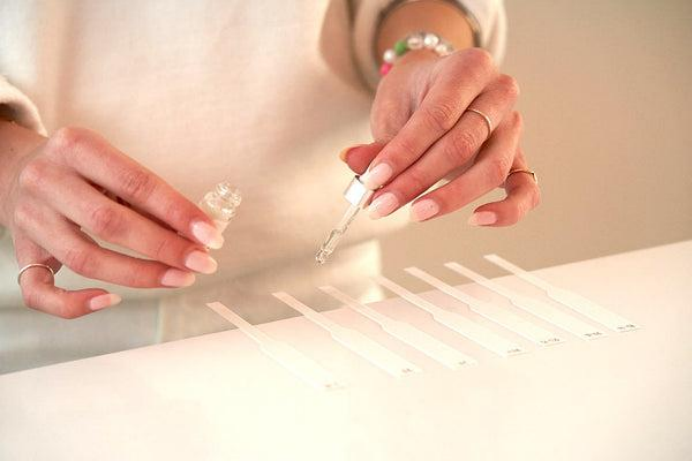
This is a common area of misunderstanding regarding fragrance products.
Many believe that a stronger scent equals a better product, but that isn't necessarily true.
If the scent is overpowering, consumers might find it "very fragrant" when first opening the product, but prolonged exposure to such an intense aroma can lead to olfactory fatigue.
Conversely, if the scent is too weak, consumers might think: "Is this product even working?"
Therefore, a good fragrance product needs to strike the right balance.
It must allow the consumer to perceive the scent without the aroma becoming overly harsh or irritating.
The real considerations are: fragrance intensity + diffusion rate + longevity + usage scenario + consumer experience...
...rather than simply chasing a higher number.
Why is the scent so strong when first opened?
When a fragrance product is first opened, consumers are usually exposed to a concentrated burst of scent.
For example, the moment the packaging is opened, the aroma that has accumulated around the product is rapidly released.
With reed diffusers, the initial contact between the fragrance liquid and the air creates a noticeable scent experience.
Even unlit scented candles release aroma from their surface.
So, the scent perceived at the very beginning doesn't fully represent how the product will perform over the long term.
What truly matters is:
Whether the fragrance continues to release steadily after the product has been in use for a period of time. This is precisely why professional product development cannot rely solely on testing "how it smells at first sniff."
Different products experience scent fading for different reasons.
Scented Candles: Burning conditions affect scent performance
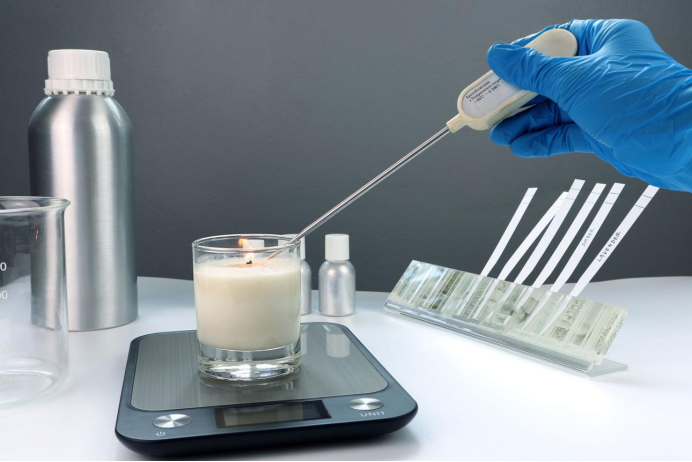
The scent performance of a scented candle depends on factors such as the wax blend, fragrance oil, wick, container, and burning conditions.
When unlit, the consumer perceives the "cold throw" (the scent of the candle itself).
Once lit, it produces a "hot throw" (the scent released while burning).
If the product formula is incompatible with the wax material, issues may arise:
It might smell fragrant, yet the scent throw during burning is lackluster.
Therefore, scented candles require actual burn testing rather than just smelling the wax itself.
Flameless Diffusers: Diffusion rate impacts the entire usage cycle
Flameless diffusers rely primarily on evaporation to disperse fragrance.
If the evaporation rate is too fast, the consumer might perceive a very strong scent initially, but the product will be consumed quickly.
Conversely, if the evaporation rate is too slow, the scent may not be noticeable enough.
Thus, flameless diffusers require a balance between fragrance concentration, evaporation rate, and the product's lifespan.
This explains why the same fragrance oil can yield vastly different results when used in different types of diffusion products.
The environment also influences the scent perceived by the consumer
Beyond the product itself, the usage environment is equally important.
The scent requirements for a small room (around 10 square meters) differ significantly from those of a large hotel lobby.
Factors such as spatial area, temperature, airflow, and ventilation can all affect scent diffusion.
For instance, the larger the space, the more likely the scent is to be diluted.
Rapid airflow can accelerate the speed of scent diffusion.
Temperature fluctuations can also impact the product's evaporation performance.
Consequently, when developing fragrance products, brands must consider:
Where will the product ultimately be used?
...rather than focusing solely on the product's state when it leaves the factory.
What consumers truly desire is a "consistent fragrance experience."
Consumers do not purchase fragrance products simply to experience a burst of strong scent the moment they open the package.
They prefer a product that feels pleasant today, remains perceptible after several days of use,
and maintains a stable experience even as it nears the end of its lifespan.
This means that the true goal for fragrance products is not an "explosive burst" of scent at a specific moment...
...but rather stability throughout the entire usage cycle. This is also a crucial component of building consumer trust.
So, why do fragrance products require real-world testing?
Because a formula's performance in the lab does not necessarily equate to its performance during actual consumer use.
Testing is essential to uncover potential issues that may arise during real-world application.
Therefore, for a brand:
A high-quality fragrance product is not merely about "creating a pleasant scent"; it is about ensuring that the scent remains stable throughout the product's entire lifecycle.
There is a great deal of work involved in bridging the gap between "smelling good" and "performing well in practice."
Consumers may see only a bottle of perfume, a candle, or a reed diffuser.
However, before a product hits the market, it typically undergoes a rigorous process:
Scent selection → Formula development → Product adaptation → Sample testing → Usage testing → Adjustment & optimization → Stability verification → Full-scale production
Thus, when selecting a fragrance supplier, brands should look beyond just:
"Who offers the lowest price?"
They should also consider: Do they have R&D capabilities? Can they resolve product adaptation issues? Can they conduct real-world testing? Can they handle the entire process from scent creation to the final product?
Ultimately, these capabilities shape the actual experience consumers have when they receive the product.
How does BILA help brands develop fragrances for various products?
We are not only a manufacturer with over 30 years of experience at the source; we also provide global brands with comprehensive, customized solutions for new product incubation and flexible production support with low minimum order quantities (MOQs). Our product range spans scented candles, perfumes, liquid diffusers, smart diffusers, and more. We manage the entire process—from scent R&D, product design, and custom bottle/packaging creation to compliant production and delivery.
Why global clients choose to partner with us (our core strengths):
✨ Flexible MOQs: From Customization to Mass Production
We support small-batch orders, helping brands minimize market testing risks and inventory pressure, while also meeting mass production needs to drive market growth.
✨ End-to-End Customization Services
We offer a one-stop service covering everything from scent R&D, custom packaging materials and visual design, to customs clearance and shipping that meets global compliance standards.
✨ Empowering Brand Growth with an International Perfumer Team
Our team of international perfumers helps brands accurately capture cutting-edge fragrance trends, enhance market competitiveness, and achieve sustainable growth. ✨ Over 30 Years of Industry Experience & Authoritative EU Certifications
Our products and services reach over 40 countries worldwide, complying with EU regulations and global industry standards such as IFRA, REACH, and CE.
✨ Artistic Fragrance Meets Eco-Consciousness
We create collectible, heirloom-quality artistic fragrances that offer multi-functional utility, championing natural, healthy, and plant-based ingredients.
Whether you are a brand owner, retailer, wholesaler, distributor, cross-border e-commerce seller, independent online store operator, corporate client, or trader—and whether you are seeking a reliable supply chain partner or looking to scale up production capacity for existing projects—we stand ready as your steadfast and dependable supply chain backbone. Contact us today.
FAQ | Common Questions About Fragrance Performance
Why do fragrance products smell particularly strong when first opened?
A concentration of fragrance molecules often builds up around the product before opening, making the scent feel more intense upon initial contact. Long-term performance depends on the product formula and the method of diffusion.
Does a higher fragrance concentration guarantee a longer-lasting scent?
Not necessarily; fragrance performance is also influenced by factors such as the product system, the specific characteristics of the fragrance oil, the rate of evaporation, and the usage environment.
Why does a reed diffuser smell strong initially but seem to fade later on?
This can be attributed to evaporation rates, ambient temperature, airflow, and the product's formula design; therefore, practical testing during the R&D phase is essential.
Why do scented candles require burn testing?
Once lit, candles generate "hot throw" (scent released while burning); since there can be differences between the "cold throw" (unlit scent) and "hot throw," actual burning is necessary to observe the product's performance.
What should brands prioritize when developing fragrance products?
Beyond the scent itself, brands should focus on the compatibility between the fragrance and the product, stability, diffusion performance, and the consumer's experience throughout the entire product lifecycle.
Conclusion | Truly Great Fragrance Is More Than Just a "Great First Impression"
The true value of a fragrance product lies in more than just the "wow factor" experienced the moment the package is opened.
What matters most is that the consumer continues to enjoy a consistent, pleasant fragrance experience after using the product for a week, a month, or even longer.
A strong scent does not automatically equate to quality, and an intense initial aroma does not guarantee excellent performance throughout the product's entire lifespan. True professional fragrance development requires a multifaceted approach, considering scent, formulation, the product itself, the environment, and the consumer experience.
For a brand, the ultimate goal is not merely a product that "smells good."
It is a product that:
Consumers are willing to use consistently and purchase again.
BILA | From scent development to final product realization—ensuring every fragrance experience stands the test of real-world use.
Text/Photos: BILA
Copyright and Right of Interpretation held by
BILA Biotechnology (Guangzhou) Co., Ltd.