
Consider a room where the furniture, lighting, and décor remain unchanged.
Yet, when the scent in the air shifts, the entire space can feel transformed.
The same living room might feel airier and lighter with fresh citrus notes;
it might exude a sense of grounded stability with woody notes;
or it might feel gentler and more soothing with soft floral notes.
Why does a simple change in fragrance alter one's perception of a space so drastically?
The answer goes beyond whether a scent simply "smells good."
Fragrances possess distinct olfactory structures, concentrations, and diffusion characteristics; consumers, in turn, form unique perceptions based on personal experience, the environment, and the context of use.
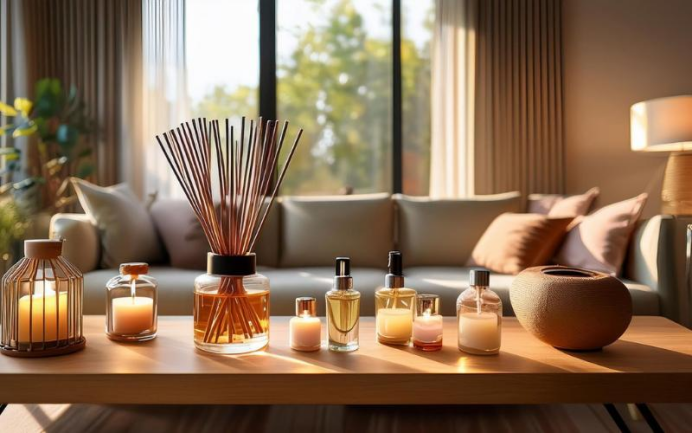
I. Fragrance as an Integral Part of the Spatial Experience
We typically judge a space through visual cues.
Seeing wooden furniture creates a sense of naturalness;
soft lighting evokes warmth;
minimalist design suggests cleanliness.
However, scent also plays a role in this overall perception.
When visual and olfactory cues convey similar feelings, the overall experience of the space feels more cohesive.
For instance, a space dominated by wood, stone, and natural tones might pair well with woody, botanical, or subtle spicy notes to create a unified sensory language.
Conversely, a bright, uncluttered space might be complemented by fresh citrus, green leaf, or light floral notes.
Thus, fragrance is not merely a standalone product within a room; it can be an integral element of spatial design.
II. Different Fragrance Notes Impart Distinct Atmospheres
There is no single "correct" way to perceive a scent.
Different fragrance notes tend to evoke distinct impressions.
Citrus notes often convey a sense of freshness and brightness;
floral notes are typically softer and more delicate;
woody notes evoke nature, warmth, and stability;
tea and green leaf notes are often used to create a crisp, clean atmosphere;
while warmer notes like amber and vanilla tend to foster a rich, mellow ambiance.
Of course, these are common associations; they do not imply that every consumer will experience the scent in exactly the same way. Because the experience of a fragrance always involves a degree of personal subjectivity.
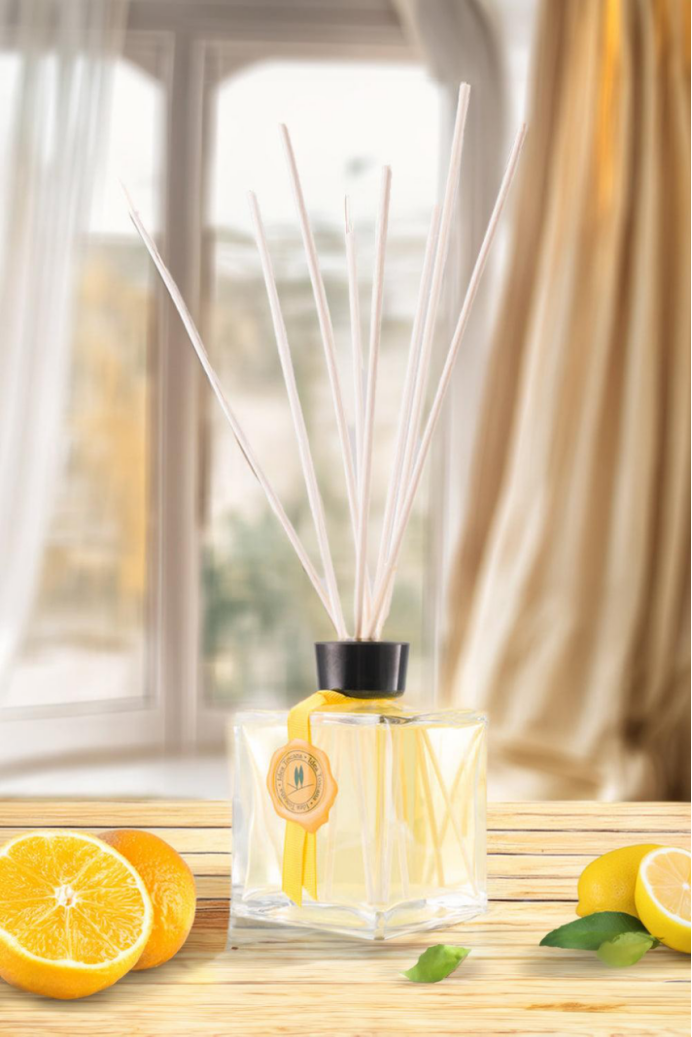
III. Why might different people perceive the same fragrance differently?
This is a fascinating aspect of fragrance products.
A consumer's perception of a scent is not determined solely by the fragrance profile itself.
Personal life experiences, familiar scents, the environment of use, and one's state of mind at the time can all influence how a fragrance is perceived.
For instance, the scent of citrus might evoke thoughts of summer and sunshine for one person, while another—due to different life experiences—might associate that same scent with something entirely different.
Therefore, when developing fragrance products, brands cannot simply assume:
"This scent smells pleasant, so everyone will like it."
True product development requires consideration of the target consumer group and the specific usage scenario.
This is precisely why fragrance testing is so important.
IV. The size of the space also alters the fragrance experience
Beyond the fragrance profile itself, the spatial environment also influences the final impression.
Using the same fragrance product in a small bedroom versus a large hotel lobby will not yield identical results.
Factors such as spatial area, airflow, temperature, diffusion equipment, and product volume can all affect how the fragrance disperses.
Consequently, when selecting fragrance products for commercial or residential spaces, one cannot focus solely on "what the scent is."
One must also consider:
How large is the space?
What diffusion method is used?
How long should the scent last?
How far are consumers from the scent source?
These factors collectively determine the ultimate spatial fragrance experience.
V. Fragrance can also transform the usage scenario of a single space
This is one reason why spatial fragrance is garnering increasing attention.
A living room might serve as a hub for family activities, reading, and work during the day, yet transform into a space for relaxation and socializing in the evening.
If the fragrance remains constant, it creates a stable olfactory environment.
However, adjusting the fragrance according to the time of day or usage scenario can create distinct spatial experiences.
The same applies to commercial spaces.
Hotel lobbies, guest rooms, restaurants, spas, and corridors can utilize different fragrance products and scent profiles tailored to their specific functions.
As a result, fragrance brands are moving beyond mere "scent development" to consider "scenario-based development" when creating products.
VI. For brands, a fragrance isn't necessarily better just because it is complex
Many people believe that high-end fragrances must feature highly complex scent profiles. In reality, scent design is more about aligning with product positioning and usage scenarios.
If a space is already visually rich, the scent may need to be more understated.
Conversely, if the space is minimalist, a distinctive scent can add character.
For commercial spaces in particular, long-term usage must be considered.
While a consumer might only smell it briefly, hotel or retail staff may be immersed in that scent environment every day.
Therefore, factors such as comfort, diffusion method, and concentration require practical testing.
VII. Moving from "Pleasant" to "Suitable": The Key to Spatial Fragrance Development
A scent that smells good isn't necessarily right for every space.
A truly suitable spatial fragrance must take into account:
Scent profile, the space itself, the product, the diffusion method, and the consumer.
This is why brands developing spatial fragrances need more than just a perfumer; they require a supply chain capable of product R&D, formula adaptation, and manufacturing.
Brands looking to enter the spatial fragrance market can start by testing in a core space before gradually expanding to other scenarios like homes, hotels, and retail stores.
When a brand successfully bridges the gap between "scent profile" and "space," the fragrance product becomes more than just an item sitting in a room.
It becomes a way for consumers to perceive and experience the space.
How does BILA help brands develop scents for various products?
We are a manufacturer with over 30 years of experience, providing global brands with comprehensive, customized solutions for new product incubation and flexible production support with low minimum order quantities (MOQs). Our product range spans scented candles, perfumes, liquid diffusers, smart diffusers, and more. We manage the entire process—from scent R&D, product design, and custom bottle/packaging creation to compliant manufacturing and delivery.
Why global clients choose to partner with us (Our core strengths):
✨ Flexible MOQs: From Customization to Mass Production
We support small-batch orders, helping brands minimize market testing risks and inventory pressure, while also meeting mass production needs to drive market growth.
✨ End-to-End Customization Services
We offer a one-stop service covering everything from scent R&D, custom packaging and visual design to customs clearance and shipping that meets global compliance standards. ✨ Empowering Brand Growth with an International Team of Perfumers
Our team of international perfumers helps brands precisely capture cutting-edge fragrance trends, enhance market competitiveness, and achieve sustainable growth.
✨ Over 30 Years of Industry Experience & Authoritative EU Certifications
Our products and services span more than 40 countries, complying with EU regulations and global industry standards such as IFRA, REACH, and CE.
✨ Artistic Fragrance & Eco-friendly Philosophy
We create collectible, heirloom-quality artistic fragrances that offer multi-functional utility, while championing natural, healthy, and plant-based ingredients.
Whether you are a brand owner, retailer, wholesaler, distributor, cross-border e-commerce seller, independent online merchant, corporate client, or trader—and whether you are seeking a reliable supply chain partner or looking to upgrade production capacity for existing projects—we stand ready as your steadfast and dependable supply chain backbone. Contact us today.
FAQ
Q1: Why does changing the fragrance alter the feel of a space?
Different fragrance profiles possess unique olfactory characteristics and evoke specific associations; furthermore, the scent interacts with the space's visuals, materials, and usage context to create a holistic experience.
Q2: Is the same fragrance suitable for every space?
Not necessarily. Factors such as space size, function, airflow, and the method of diffusion can all influence the final olfactory performance.
Q3: What are the differences between developing fragrance products for homes versus hotels?
Home products typically prioritize personal preference and ease of use, whereas commercial spaces like hotels require considerations regarding spatial dimensions, continuous diffusion, equipment, and the long-term user experience.
Q4: Is testing required when a brand develops spatial fragrances?
Yes. Practical testing allows us to understand how a fragrance performs across different products, spaces, and diffusion methods, enabling adjustments to the formula and application strategy.
BILA specializes in fragrance R&D and product adaptation tailored to specific spaces and usage scenarios, helping brands evolve from simply offering "pleasant scents" to creating fragrance products truly optimized for their intended environments.
Text/Photos: BILA
Copyright and Right of Interpretation held by
BILA Biotechnology (Guangzhou) Co., Ltd.