
In today’s consumer market, an increasing number of brands are facing a common challenge:
Why do some products consistently win consumer approval and command higher price points, while others are forced to compete solely on low prices?
In the past, consumers focused primarily on a product's functional attributes when making a purchase—
such as whether a scented candle actually released fragrance, whether a perfume was long-lasting, or whether a diffuser effectively improved the scent of a space.
However, with the trend of consumption upgrading, consumer needs are evolving.
They now ask: Does this product align with my aesthetic? Does it represent a specific lifestyle?
Does it offer a unique emotional experience?
This is precisely why more brands are re-evaluating the value of fragrance.
Fragrance is no longer merely a supplementary element designed to enhance the user experience; it has increasingly become a vital tool for brands to differentiate themselves and elevate product value.
For a brand, an exceptional fragrance product is not just about selling a "scent"; it is about conveying the brand's philosophy, lifestyle, and the kind of experience the consumer desires.
I. The Essence of Product Premium: Consumers Perceive Greater Value
Many brands observe a specific phenomenon when entering the market:
For the same type of product, there can be a significant price gap between different brands.
For instance, a standard scented candle might only need to satisfy the basic requirement of "emitting fragrance."
In contrast, for a high-end fragrance product, consumers look beyond the scent itself.
They consider factors such as: Is the fragrance profile unique? Is the product design aesthetically pleasing? Do the raw materials align with the brand's values? Does using it provide a delightful experience? Is there a compelling story behind the product?
It is this added value that enables brands to command a premium price.
A true price premium is not simply about raising the price; it is about convincing the consumer that:
The product is worth a higher value. Fragrance serves as a crucial medium connecting the product to the consumer's emotions.
Unlike functional specifications, which are easily compared, scent directly influences a consumer's feelings and memories.
II. Fragrance Is Becoming a Key Asset for Brand Differentiation
In today’s market landscape, products are increasingly becoming alike. With similar packaging styles, product functions, and sales channels, it is becoming increasingly difficult for brands to stand out in consumers' minds.
Consequently, more and more brands are seeking new ways to differentiate themselves.
Scent, in particular, offers immense potential as a medium for brand expression.
For instance:
A home lifestyle brand emphasizing a natural way of living can convey values of eco-friendliness, comfort, and a connection to nature through botanical, woody, or herbal notes.
A brand positioned for "affordable luxury" can craft a sophisticated, elegant consumer experience using more nuanced, multi-layered fragrance notes.
A brand targeting a younger demographic can establish a connection with its audience through fresh, distinctive, and energetic scents.
For a brand, the goal is not merely to select a scent that simply "smells good."
Rather, the aim is to find a fragrance that embodies the brand's core values.
When consumers encounter a similar scent again and immediately associate it with the brand, that accumulated memory value becomes a source of competitive advantage.
As a result, brands are increasingly seeking suppliers capable of developing signature scents, rather than simply sourcing generic fragrances already available on the market.
Partnering with a professional supplier—such as a top-tier Chinese home fragrance manufacturer with strong R&D capabilities—enables brands to create tailored fragrance solutions that align with their market positioning, consumer needs, and product characteristics.
III. From "Selling Products" to "Creating Experiences": Fragrance is Transforming Brand Expression
Modern consumers place increasing importance on the experience associated with a purchase.
This is especially true in sectors such as home goods, beauty, hospitality, and gifting, where products offer far more than just basic functionality.
Consumers look for products that evoke a specific feeling or atmosphere.
For example:
Lighting a scented candle after returning home from get off work serves as a relaxing ritual;
A unique signature scent in a hotel lobby enhances the guest experience;
A personal fragrance allows an individual to express their character and lifestyle.
While these experiences cannot be captured simply through product specifications, they profoundly influence how consumers perceive the brand. Therefore, for a brand, developing a fragrance involves considering more than just the question: "Does it smell good?"
It requires asking: "What feeling do we want to evoke in the consumer?" "What lifestyle scenarios does it suit?" and "Does it align with the brand positioning?"
Only when the scent, product design, and brand philosophy are in harmony can the fragrance truly become an integral part of the brand's value.
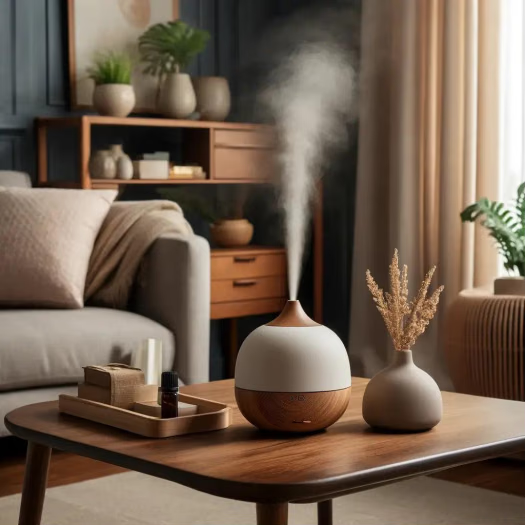
IV. Fragrance product design shapes the consumer's initial impression of value
Often, consumers form a judgment about a product's value based on visuals before they even smell the fragrance.
Consequently, high-value fragrance products focus not only on scent development but also on overall design.
This encompasses product appearance, container materials, packaging design, gift box presentation, and usage scenarios.
For example:
Handcrafted ceramic products can add an artistic touch and collectible value;
Exquisite glass containers can elevate the product's sense of accessible luxury;
Eco-friendly packaging can reinforce the brand's commitment to sustainability.
This is particularly important for brands aiming for a mid-to-high-end market position; the product must deliver a cohesive, unified experience.
The scent conveys emotion;
The design expresses aesthetic appeal;
The packaging reinforces brand recall.
It is the combination of these three elements that truly elevates the consumer's perception of the product's value.
V. Creating high-value fragrances requires more than just manufacturing capabilities
Many brands assume that simply finding a manufacturer is enough to complete a fragrance project.
In reality, however, a polished fragrance product goes through multiple stages from concept to market launch:
Scent development; formula adjustment; raw material selection; sample testing; packaging component matching; packaging design; mass production; and quality control.
A problem at any stage can compromise the final consumer experience.
That is why an increasing number of brands are seeking partners who can participate in the entire product development process, rather than just "factories."
For instance:
The brand defines the product positioning;
The R&D team analyzes the target market;
The perfumer designs the scent profile;
The formula is adjusted based on the specific product format;
Production begins after testing is complete.
This collaborative approach helps brands reduce communication costs during development while increasing the likelihood of product success. For brands seeking the best home fragrance factory in Guangzhou, China, price is not the only factor to consider; it is equally important to evaluate a supplier's capabilities in R&D, production, customization, and supply chain integration.
6. Flexible Customization: Unlocking Opportunities for Product Innovation
In the past, brands often faced significant risks when developing new products.
Committing to large-scale production upfront could lead to inventory pressure if market feedback fell short of expectations.
Consequently, an increasing number of brands are turning toward more flexible supply chain models.
Examples include: small-batch testing, custom fragrance development, testing various packaging options, and validating multiple product concepts.
This approach allows brands to gain a more precise understanding of consumer needs.
For brands new to the fragrance market, in particular, small-batch customization not only lowers the cost of trial and error but also enables rapid adjustments to product strategy.
An excellent fragrance supplier must excel in three key areas:
Innovation capabilities;
Rapid response capabilities;
Stable production capabilities.
Only then can a brand successfully transform a creative concept into a market-ready product.
How does BILA help brands create high-value fragrance products?
As a manufacturer with over 30 years of experience, we provide global brands with comprehensive solutions for new product incubation—ranging from custom fragrance development and product design to bottle and packaging customization, as well as compliant production and delivery. Our diverse product portfolio includes scented candles, perfumes, liquid diffusers, smart diffusers, and more.
Why global clients choose to partner with us (Our core strengths):
✨ Flexible MOQ: From Customization to Mass Production
We support small-batch orders to help brands minimize market testing risks and inventory pressure, while also meeting large-scale production needs to drive market growth.
✨ End-to-End Customization Services
We offer a one-stop service covering everything from fragrance R&D, packaging customization, and visual design to customs clearance and shipping that meets global compliance standards.
✨ Empowering Brand Growth with an International Perfumer Team
Our team of international perfumers helps brands capture cutting-edge fragrance trends, enhance market competitiveness, and achieve sustainable growth. ✨ Over 30 Years of Industry Experience & Authoritative EU Certifications
Our products and services reach over 40 countries worldwide, complying with EU regulations and global industry standards such as IFRA, REACH, and CE.
✨ Artistic Fragrance & Eco-friendly Philosophy
We create collectible, heirloom-quality artistic fragrances that offer multi-functional utility, championing the use of pure plant-based ingredients for a natural, healthy lifestyle.
Whether you are a brand owner, retailer, wholesaler, distributor, cross-border e-commerce seller, independent online store operator, corporate client, or trader—and whether you are seeking a reliable supply chain partner or looking to scale up production capacity for existing projects—we stand ready as your solid, dependable supply chain backbone. Contact us today.
FAQ
1. How does fragrance help brands increase product premium value?
Fragrance enhances the consumer experience; through unique scents, designs, and brand storytelling, it elevates the consumer's perception of the product's value.
2. Can brands develop their own exclusive scents?
Yes.
Brands can collaborate with our perfumery team to develop exclusive scents that reflect their unique identity, based on their market positioning, target audience, and usage scenarios.
3. Can small brands opt for custom fragrance solutions?
Yes.
With flexible Minimum Order Quantity (MOQ) options, small brands can conduct market testing first and then scale up production based on sales feedback.
4. What should be considered when choosing a fragrance manufacturer?
Beyond price, key factors include R&D capabilities, production capacity, quality control, packaging customization capabilities, and long-term supply stability.
At BILA Fragrance Customization Factory, we help brands transform a scent concept into memorable brand value through professional R&D and end-to-end customization services.
Text/Photos: BILA
Copyright and Right of Interpretation held by
BILA Biotechnology (Guangzhou) Co., Ltd.