
BILA Custom Fragrance Factory – What New Competitive Standards Will Define the Future Fragrance Supply Chain?
Shifting from "Manufacturing Capability" to "Comprehensive Service Capability": The Fragrance Supply Chain Enters a New Era
In the past, when brands selected fragrance suppliers, their primary concerns were usually:
Is the price competitive?
Is production capacity sufficient?
Are delivery times reliable?
However, as the global fragrance market evolves, brand requirements for the supply chain are changing.
Today, competition in the fragrance industry is no longer just about the product itself; it is a competition of supply chain capabilities.
As consumer demands become increasingly diverse, the challenges brands face when developing new products grow more complex:
How do we create scents that align with market trends?
How do we rapidly test new product concepts?
How do we manage inventory risk?
How do we meet regulatory requirements across different national markets?
How do we successfully execute the entire process from concept to market launch?
Addressing these issues requires the fragrance supply chain to possess comprehensive capabilities.
In the future, truly competitive fragrance suppliers will not merely be manufacturers; they will be partners capable of helping brands achieve product innovation, market validation, and long-term growth.
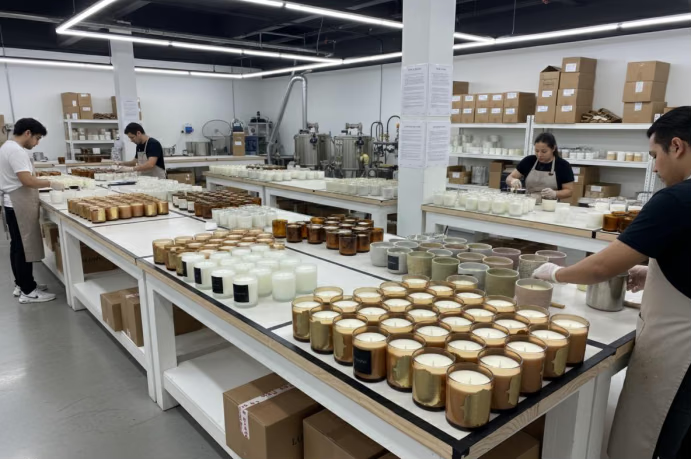
I. R&D Capability: A Key Competitive Standard for the Fragrance Supply Chain
In the past, many brands prioritized production costs when selecting suppliers.
However, with intensifying market competition, relying solely on low-cost manufacturing makes it increasingly difficult to maintain a long-term competitive edge.
The reasons are as follows:
Consumer expectations regarding fragrance are rising.
They are no longer satisfied with ordinary scents; instead, they seek products that offer:
Uniqueness;
Memorability;
Brand alignment.
Consequently, a supply chain's ability to develop and innovate scents will become a crucial competitive standard in the future.
A professional fragrance supplier must be able to understand:
Brand positioning;
Target consumer demographics;
Market trends;
Product usage scenarios.
For example:
A brand positioned around a natural lifestyle requires scent profiles that feel natural and comforting;
A high-end home goods brand requires fragrance expressions that are layered and sophisticated;
A brand targeting younger consumers requires innovative scent notes that align with current market trends.
Therefore, the fragrance supply chain of the future will not simply manufacture products for brands; it will need to participate in the product ideation and creative stages. For brands seeking the best fragrance factories in China, a supplier's R&D team and fragrance formulation capabilities are critical factors for evaluation.
II. Flexible production capabilities help brands mitigate market risks.
In the past, developing new products often required brands to commit to large-scale production runs right from the start.
While this model might suit established brands, it entails higher risk for new brands, cross-border brands, and companies currently testing market directions.
For instance:
Will consumers like the scent?
Does the packaging design resonate with the market?
Is the price point acceptable?
What is the feedback from sales channels?
These questions require market validation.
Consequently, the fragrance supply chain of the future needs to be more flexible.
This includes:
Small-batch customization;
Rapid prototyping;
New product testing;
Scalability from pilot to mass production.
A flexible production model helps brands:
Reduce inventory pressure;
Lower development risks;
Accelerate market responsiveness.
This is why an increasing number of brands are seeking partners that support flexible Minimum Order Quantities (MOQs).
An excellent fragrance factory in Guangzhou needs not only stable production capacity but also the ability to meet the growth needs of brands at various stages of development.
III. Multi-category integration capabilities will become a new supply chain advantage.
As fragrance consumption scenarios expand, brands require increasingly diverse product portfolios.
In the past, a brand might have focused on developing only a single type of product, such as:
Perfumes;
Scented candles;
Diffusers.
Today, however, consumers desire a holistic experience from brands.
Therefore, brands may need to simultaneously develop multiple categories, such as:
Scented candles;
Liquid diffusers;
Perfumes;
Smart diffusers;
Fragrance gift sets.
If different products are handled by different suppliers, brands must invest significant time in communication and management.
A supply chain capable of multi-category production helps brands improve efficiency.
It ensures overall brand consistency—from scent profiles and packaging styles to the development of cohesive product series.
In the future, suppliers capable of providing integrated multi-category services will be better positioned to become long-term partners for brands. IV. Global compliance capabilities will become a critical threshold for overseas markets
As more brands enter international markets, product compliance has become a vital capability within the supply chain that cannot be overlooked.
Different countries and regions have varying requirements for fragrance products, such as:
Raw material standards;
Safety testing;
Product documentation;
Packaging requirements;
Import regulations.
For brands looking to expand overseas, a mature supply chain partner needs to do more than just manufacture products; they must also help lower the barriers to market entry.
Therefore, future competition in the fragrance supply chain will not simply be about "production capability."
It will also depend on:
Knowledge of international standards;
Experience with relevant certifications;
The ability to assist brands in navigating compliance processes.
Compliance capabilities will be a key factor for brands when selecting suppliers, especially in mature markets like Europe and North America.
V. Supply chain responsiveness will impact a brand's market competitiveness
Markets are changing increasingly fast these days.
New fragrance trends can emerge in a very short time.
If the supply chain lacks responsiveness, brands risk missing out on market opportunities.
Consequently, future supply chains must possess:
Rapid communication capabilities;
Rapid development capabilities;
Rapid adjustment capabilities.
For example:
A brand identifies a consumer preference for a specific fragrance trend;
The supplier can quickly adjust the fragrance profile;
Complete sample testing;
And move forward with production.
This type of collaborative model helps brands enter the market faster.
Future competition will not just be about:
Who has lower production costs.
It will be about:
Who can help brands bring products to market the fastest.
VI. Artistic design capabilities will also influence the competitiveness of fragrance products
Future competition in fragrance products will go beyond the scent itself.
The visual experience is equally important.
Especially in the home, beauty, and gift markets, consumers are increasingly concerned with:
Whether the product has a strong design aesthetic;
Whether it integrates well into living spaces;
Whether it holds collectible value.
Therefore, the supply chain needs comprehensive capabilities ranging from product design to the execution of packaging.
Examples include:
Unique bottle designs;
Artistic fragrance containers;
Customized gift boxes;
Eco-friendly packaging solutions.
These elements help brands enhance product distinctiveness and recognition. In the future, high-value fragrance products will increasingly emphasize the combination of:
Scent × Design × Craftsmanship × Brand Philosophy.
VII. Future top-tier fragrance supply chains must act as growth partners for brands.
The criteria brands use to select suppliers are shifting.
In the past:
Supplier = Product Manufacturer.
In the future:
Supplier = Product Development Partner.
Brands need more than just a factory that manufactures products;
They need a partner capable of executing the entire process:
Market analysis, scent development, product design, manufacturing, quality control, and global delivery.
This represents the core competitive focus for supply chains in the future fragrance industry.
How does BILA help brands build stable, efficient fragrance supply chains?
We are not only a primary manufacturer with over 30 years of experience but also a provider of comprehensive, customized implementation solutions and flexible, low-MOQ production support for global brands. Our product range spans scented candles, perfumes, liquid diffusers, smart diffusers, and more. We manage the entire process—from scent R&D, product design, and custom bottle/packaging creation to compliant manufacturing and delivery.
Why global clients choose to partner with us (Our core strengths):
✨ Flexible MOQs: From Customization to Mass Production
We support small-batch orders, helping brands minimize market testing risks and inventory pressure, while also meeting mass production needs to drive market growth.
✨ End-to-End Customization Services
We provide a one-stop service covering everything from scent R&D, custom packaging materials and visual design to customs clearance and shipping that meets global compliance standards.
✨ Empowering Brand Growth with an International Perfumer Team
Our team of international perfumers helps brands accurately capture cutting-edge scent trends, enhance market competitiveness, and achieve sustainable growth.
✨ 30+ Years of Industry Experience & EU Certifications
Our products and services reach over 40 countries, complying with EU regulations and global industry standards such as IFRA, REACH, and CE.
✨ Artistic Fragrance & Eco-friendly Philosophy
We create collectible, heirloom-quality artistic fragrances that offer multi-functional utility, while championing natural, healthy, and plant-based ingredients. Whether you are a brand owner, retailer, wholesaler, distributor, cross-border e-commerce seller, independent online store operator, corporate client, or trader—and whether you are seeking a reliable supply chain partner or looking to scale up production capacity for existing projects—we stand ready as your steadfast and dependable supply chain backbone. Contact us today.
FAQ
Q1: What is the most important capability for a brand when selecting a fragrance supplier?
Beyond production capacity, key factors include R&D capabilities, customization expertise, supply chain responsiveness, and the ability to support global market operations.
Q2: Do small brands also need a professional fragrance supply chain partner?
Yes. A professional supply chain partner helps brands mitigate the risks associated with new product development and accelerates time-to-market.
Q3: What services do fragrance OEM factories provide?
Services typically include fragrance R&D, product design, custom packaging, manufacturing, quality control, and delivery.
Q4: Why should brands choose suppliers that offer flexible MOQs (Minimum Order Quantities)?
Flexible MOQs allow brands to test the market first and scale up production based on sales feedback, thereby reducing inventory pressure.
BILA Fragrance Customization Factory empowers global brands to transform concepts into market-ready products, leveraging professional R&D, flexible manufacturing, and comprehensive supply chain capabilities to create highly competitive fragrance products.
Text/Photos: BILA
Copyright and Right of Interpretation held by
BILA Biotechnology (Guangzhou) Co., Ltd.