
From raw material selection to supply chain management, how do brands create cost-effective fragrance products?
As the fragrance market continues to grow, more and more brands are expanding into scented candles, perfumes, liquid diffusers, and home fragrance products.
However, for a brand, developing a new fragrance product involves more than just picking a scent and starting production.
Before entering the market, brands must consider several practical issues:
Does the product quality meet consumer expectations? Are costs kept within a reasonable range? Does the packaging design align with the brand positioning? Is the minimum order quantity (MOQ) suitable for the current stage of development? Can the supply chain support future growth?
For new brands, cross-border e-commerce brands, and companies expanding into new categories, finding the right balance between "quality" and "cost" is one of the most critical challenges in product development.
Excessive cost-cutting can compromise the product experience;
Yet, an uncompromising pursuit of high specifications can create market pressure.
An excellent fragrance supply chain partner helps brands find a development strategy that aligns with their specific positioning.
I. Why do brands need to rethink "cost" when developing fragrance products?
In the early stages of product development, many brands simplify the concept of cost to just:
Raw material prices; production costs; and packaging costs.
In reality, however, the total cost of a fragrance product also includes:
R&D costs; costs associated with trial and error; inventory costs; supply chain management costs; and market testing costs.
If a brand chooses to cut costs by:
Purchasing large quantities of products with uncertain market demand; lowering raw material quality; or skipping necessary testing steps...
...it might lower costs in the short term but could lead to higher risks in the long run.
Examples include: poor sales performance; excess inventory; a decline in consumer experience; and damage to the brand's reputation.
Therefore, truly mature cost control is not about simply chasing the lowest price, but rather about:
Finding the optimal balance between quality, market demand, production efficiency, and brand positioning.
II. Product positioning determines the direction of quality and cost
Before developing fragrance products, brands must first clarify:
Who is the product for? What value does it aim to convey? What is the target market? Different market positionings entail completely different requirements for product cost structures.
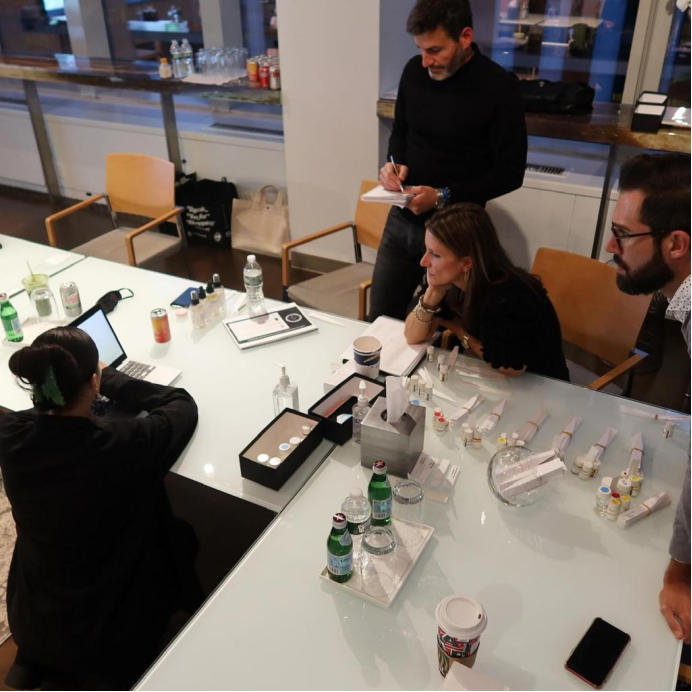
For example:
Mass-market fragrance products
Consumers focus more on price, practicality, and the everyday usage experience.
Brands may need to prioritize optimizing production efficiency, packaging costs, and product structure.
Mid-to-high-end fragrance products
Consumers focus more on scent quality, design aesthetics, the brand story, and the overall user experience.
Brands need to invest more in scent development, packaging design, and craftsmanship.
High-end artistic fragrance products
Consumers purchase more than just product functionality; they value aesthetic appeal, collectibility, and the brand philosophy.
Consequently, the focus shifts to unique designs, specialized craftsmanship, and product differentiation.
Therefore, when developing fragrance products, the first step is not cost reduction, but establishing the correct market positioning.
Only by clearly identifying the target consumer can costs be allocated effectively.
III. How can supply chain optimization reduce development costs?
For brands, selecting the right supply chain partners can effectively alleviate cost pressures during product development.
1. Reducing trial-and-error costs through professional R&D
One of the major hidden costs in fragrance product development is the cycle of constant revision and testing.
If a supplier lacks R&D experience, a brand may face repeated scent adjustments, sample remakes, and packaging redesigns.
This increases both the time required and the overall development expenses.
In contrast, professional fragrance suppliers can provide scent recommendations, product concepts, and market trend analyses upfront based on brand needs, helping brands minimize wasted investment.
2. Mitigating inventory risk through flexible MOQs
For many brands—especially during the new product development phase—the greatest pressure often stems from inventory risk rather than production costs alone.
Excessive initial production volumes can lead to unpredictable market reception, tied-up capital, and increased warehousing burdens.
Consequently, supply chain models that support flexible Minimum Order Quantities (MOQs) are becoming increasingly popular among brands.
Brands can conduct small-batch market tests, adjust based on sales feedback, and then scale up production.
This approach helps brands reduce the risks associated with launching new products.
3. Boosting efficiency through one-stop services
If a brand has to separately source fragrance suppliers, packaging material suppliers, design agencies, manufacturers, and logistics providers, the entire development process becomes significantly more complex. A fragrance factory with comprehensive supply chain capabilities can help brands integrate:
Fragrance R&D, product design, custom packaging, manufacturing, quality control, and delivery services—thereby reducing communication costs and accelerating time-to-market.
IV. Where should investment be focused for high-quality fragrance products?
Cost control does not mean compromising on quality.
Truly competitive brands invest in the key areas that shape the consumer experience.
1. Fragrance R&D
Scent is the core of a fragrance product; what consumers ultimately remember is the olfactory experience the product delivers.
Therefore, brands need to invest in professional fragrance creation, scent testing, and market trend analysis to craft products with a distinctive identity.
2. Raw Material Selection
Different raw materials impact scent performance, the user experience, and product stability.
Examples include the wax used in scented candles, the fragrance composition in perfumes, and the diffusion materials in liquid diffusers. Judicious material selection allows for cost optimization without sacrificing quality.
3. Packaging Design
Fragrance products have a strong visual component.
Packaging often shapes the consumer's first impression at the point of purchase.
However, high-quality packaging does not necessarily entail high costs.
Through smart material selection, design optimization, and supply chain integration, brands can create products that exude a premium feel.
V. How can smaller brands develop competitive fragrance products?
For brands new to the fragrance market, the biggest challenges are typically a lack of established supply chains, insufficient product development experience, and an inability to gauge market trends. Consequently, finding a professional partner is crucial.
A top-tier Chinese fragrance factory does more than just handle production; it helps brands solve practical problems throughout the product development process.
This includes selecting market-appropriate scents, designing product portfolios, managing development costs, and achieving stable mass production.
The value of the supply chain lies not merely in lowering production costs, but in boosting the brand's overall probability of success.
VI. Future fragrance competition will place greater emphasis on balancing value and cost.
In the competitive landscape of the future, consumers will not focus solely on low prices.
They will place greater importance on whether the product is worth buying, whether the experience meets expectations, and whether the brand possesses a unique character. Therefore, what brands need to create are high-value products at reasonable costs.
Truly successful fragrance brands are not necessarily those with the lowest production costs; rather, they are brands that—through a professional supply chain—effectively integrate creativity, quality, design, pricing, and market demand.
How does BILA help brands strike a balance between quality and cost?
We are not only a primary manufacturer with over 30 years of experience but also a provider of comprehensive, customized implementation solutions and flexible, low-MOQ production support for new product incubation. Our product range spans scented candles, perfumes, liquid diffusers, smart diffusers, and more. We manage the entire process—from fragrance R&D, product design, and custom bottle/packaging creation to compliant production and final delivery.
Why global clients choose to partner with us (Our Core Strengths):
✨ Flexible MOQs: From Customization to Mass Production
We support small-batch orders, helping brands minimize market testing risks and inventory pressure, while also meeting mass production needs to drive market growth.
✨ End-to-End Customization Services
We offer one-stop services covering everything from fragrance R&D, custom packaging materials and visual design to customs clearance and shipping that meet global compliance standards.
✨ Empowering Brand Growth with an International Perfumer Team
Our team of international perfumers helps brands accurately capture cutting-edge fragrance trends, enhance market competitiveness, and achieve sustainable growth.
✨ 30+ Years of Industry Experience & EU Certifications
Our products and services reach over 40 countries, complying with EU regulations and global industry standards such as IFRA, REACH, and CE.
✨ Artistic Fragrance & Eco-friendly Philosophy
We create collectible, heirloom-quality artistic fragrances that offer multi-functional utility, while championing natural, healthy, and plant-based ingredients.
Whether you are a brand owner, retailer, wholesaler, distributor, cross-border e-commerce seller, independent online merchant, corporate client, or trader—and whether you are seeking a reliable supply chain partner or looking to scale up production capacity for existing projects—we stand ready as your solid, dependable supply chain backbone. Contact me today. FAQ
Q1: Should a brand prioritize quality or cost when developing fragrance products?
The brand should first define its product positioning, then formulate a strategy that balances quality and cost based on the target consumer.
Q2: How can small brands minimize risk when developing fragrance products?
Risks and inventory pressure can be reduced through small-batch customization, market testing, and flexible production methods.
Q3: Can fragrance OEM factories help brands control costs?
Yes; professional supply chain partners can help brands improve efficiency through R&D optimization, material selection, and production integration.
Q4: Does low cost imply low quality?
No; strategic supply chain planning allows brands to maintain product competitiveness while effectively controlling costs.
BILA Fragrance Customization Factory enables brands to strike the optimal balance between quality and cost—tailored to their specific growth needs—by leveraging professional R&D, flexible customization, and mature supply chain capabilities.
Text/Photos: BILA
Copyright and Right of Interpretation held by
BILA Biotechnology (Guangzhou) Co., Ltd.