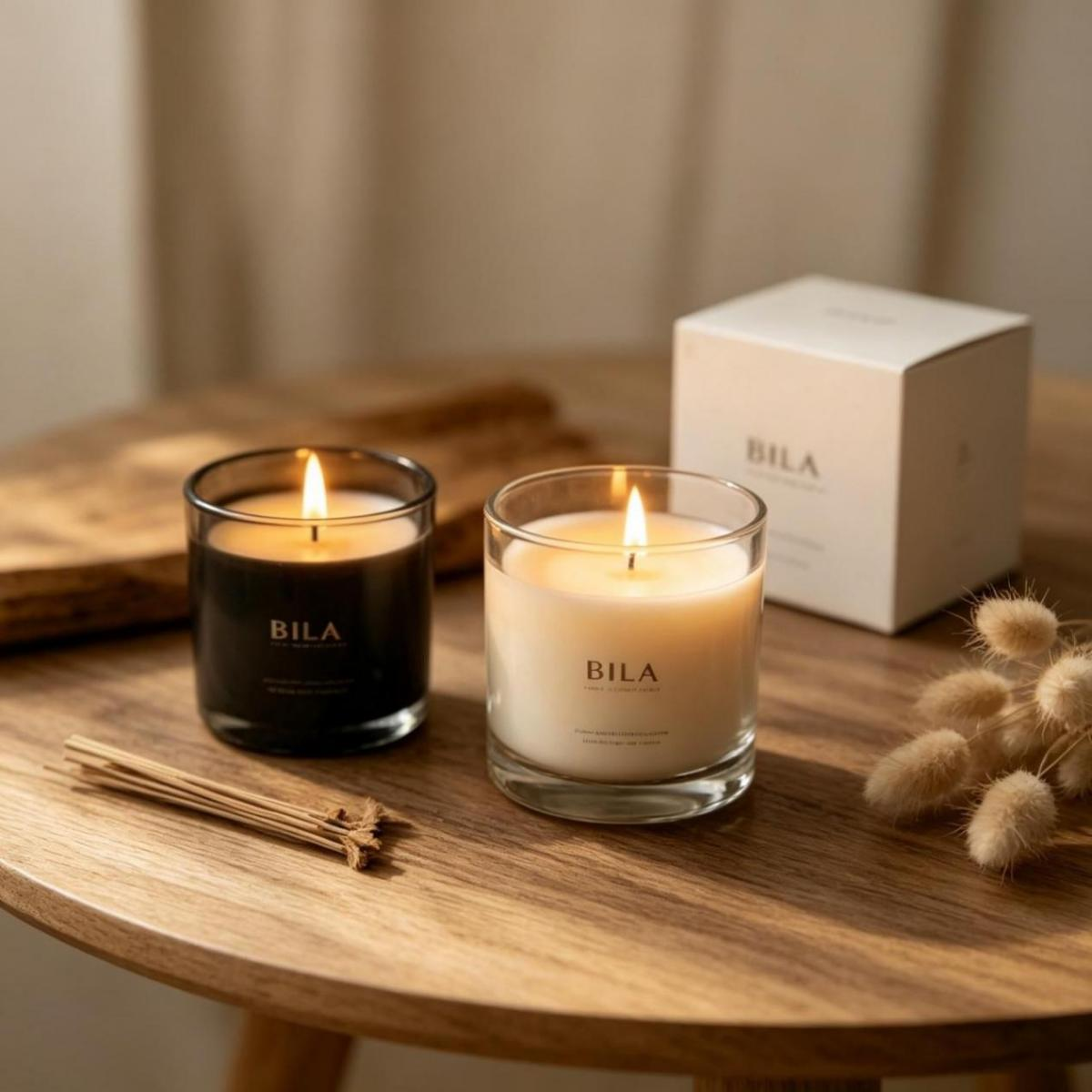
For new brands, cross-border e-commerce brands, or companies developing new fragrance products, a common dilemma arises when seeking a manufacturer:
Many factories are willing to accept small-batch orders but have limited customization capabilities; conversely, factories with genuine R&D and production prowess often require high Minimum Order Quantities (MOQs).
However, the ideal supplier for a brand is one that offers:
The ability to conduct small-batch testing in the early stages, followed by a seamless transition to large-scale production once the product matures.
This not only lowers the cost of trial and error for new products but also eliminates the need for brands to find new suppliers after achieving market success.
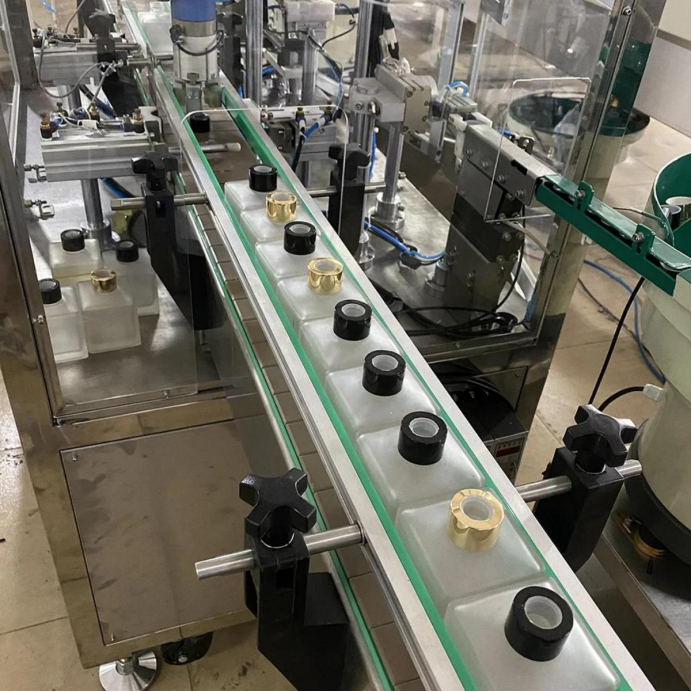
I. Why is it difficult to achieve both "small-batch" and "large-scale" capabilities?
Small-batch production may seem simple, but for a factory, it actually demands a more flexible supply chain.
For instance, a new product might require only a few hundred units—or even fewer—yet the factory must still execute the entire process:
Raw material preparation → Formula confirmation → Production → Filling/Molding → Packaging → Quality inspection.
If a factory’s production model is geared entirely toward massive orders, small-batch customization often leads to issues like excessively high MOQs, limited customization options, difficulties transitioning from samples to mass production, and long lead times for small orders.
Conversely, a factory that specializes only in small batches may fail to provide stable, sufficient capacity when sales volume grows.
Therefore, what brands truly need is not merely a "low MOQ," but supply chain capabilities that can accommodate the product's various stages of development.
II. What does small-batch customization mean for the factory?
For new brands, small-batch production is not simply about "producing a smaller quantity."
It often entails a testing phase where brands determine: Which scents do consumers prefer? Which specifications sell best? Which product positioning fits the market?
Ideally, the factory should support brands in flexible product development during these early stages.
Examples include: custom scents, adjustable product specifications, custom logos, packaging material selection, and custom packaging designs.
By entering the market with small batches, brands can validate their products before deciding whether to scale up orders.
This is precisely why, when searching for the best fragrance factories in China, an increasing number of brands prioritize those that offer flexible MOQs and customization services. III. The Real Challenge: Scaling Up Successfully After Small-Batch Runs
If a product succeeds in market testing, orders may surge from 500 units to 5,000, 10,000, or even more.
At this critical juncture, the last thing a brand wants to hear is: "Sorry, we don't have the capacity to handle that volume."
Therefore, when selecting a factory, brands shouldn't just ask, "What is your minimum order quantity (MOQ)?"
They should also ask, "If this product sells well, can you maintain stable, high-volume production?"
This is the true link between small-batch runs and mass production.
IV. From Small-Batch to Mass Production: Stability is Key
When order volumes scale up, factories face challenges that go beyond mere quantity increases.
Consistency must be maintained across raw material batches, formulation precision, equipment performance, filling efficiency, and quality control.
This is especially critical for fragrance products, where scent consistency is paramount.
If the mass-produced product differs noticeably from the sample initially approved by the brand, it can directly damage consumer perception.
Therefore, a factory capable of a true long-term partnership must possess:
R&D capabilities + flexible production + quality control + stable production capacity.
V. What Kind of Factory Best Supports Long-Term Brand Growth?
The ideal partnership model looks like this:
Early Stage: Small-batch development and market testing
Mid-Stage: Product and supply chain optimization
Late Stage: Stable mass production and scaled delivery
This approach eliminates the need for brands to switch suppliers as orders grow, effectively reducing long-term supply chain risk.
How Does BILA Help Brands Scale from Small Batches to Mass Production?
BILA partners with brands starting from the new product development phase.
In the early stages, we offer fragrance R&D, formula adjustments, product customization, and flexible MOQ production, allowing brands to conduct market tests with minimal inventory pressure.
Once a product is market-validated, we seamlessly transition to mass production.
From fragrance R&D → sample testing → product finalization → small-batch production → quality control → mass production → final delivery, we ensure brands don't need to switch suppliers at different stages of growth.
Ultimately, the ideal partner isn't simply the factory with the "lowest MOQ," but one that:
Is willing to grow with the brand from the very first batch and has the capacity to handle future scaling needs. How does BILA help brands develop fragrances for diverse products?
As a manufacturer with over 30 years of experience, we provide global brands with comprehensive, customized solutions and flexible, low-MOQ production support for new product incubation. Our product range spans scented candles, perfumes, liquid diffusers, smart diffusers, and more. We manage the entire process—from fragrance R&D, product design, and custom packaging to compliant manufacturing and delivery.
Why global clients partner with us (Our core strengths):
✨ Flexible MOQs: From Customization to Mass Production
We support small-batch orders, helping brands minimize market testing risks and inventory pressure, while also meeting mass production needs to drive market growth.
✨ End-to-End Customization Services
We offer a one-stop service covering everything from fragrance R&D, custom packaging, and visual design to customs clearance and shipping that meets global compliance standards.
✨ International Perfumer Team Driving Brand Growth
Our team of international perfumers helps brands capture cutting-edge fragrance trends, boost market competitiveness, and achieve sustainable growth.
✨ 30+ Years of Industry Experience & EU Certifications
Our products and services reach over 40 countries, complying with EU regulations and global standards such as IFRA, REACH, and CE.
✨ Artistic Fragrance & Eco-Friendly Philosophy
We create collectible, heirloom-quality artistic fragrances that offer multi-functional utility, emphasizing natural, healthy, plant-based ingredients.
Whether you are a brand owner, retailer, wholesaler, distributor, cross-border e-commerce seller, independent online merchant, corporate client, or trader—and whether you are seeking a reliable supply chain partner or looking to scale up production for existing projects—we stand ready as your solid, dependable supply chain backbone. Contact us today.
FAQ
Q1: Is small-batch customization suitable for new brands?
A: Yes. Testing the market with small batches reduces the inventory and trial-and-error risks associated with the early stages of new product development.
Q2: Why shouldn't I focus solely on a factory's minimum MOQ?
A: MOQ is just one aspect of supply chain capability; what matters more is the factory's ability to provide R&D, customization, quality control, and subsequent mass production.
Q3: Can I scale up orders directly after small-batch production? A: It is best to verify the factory's production capacity and mass production capabilities in advance to ensure a smooth ramp-up in volume once product validation is successful.
Q4: What key factors should be considered when selecting a factory?
A: We recommend focusing on R&D capabilities, MOQs, customization capabilities, production equipment, quality control, production capacity, and delivery capabilities.
BILA Fragrance Customization Factory—the ideal supply chain partner for global fragrance brands and buyers.
Text/Photos: BILA
Copyright and Right of Interpretation held by
BILA Biotechnology (Guangzhou) Co., Ltd.

.png)