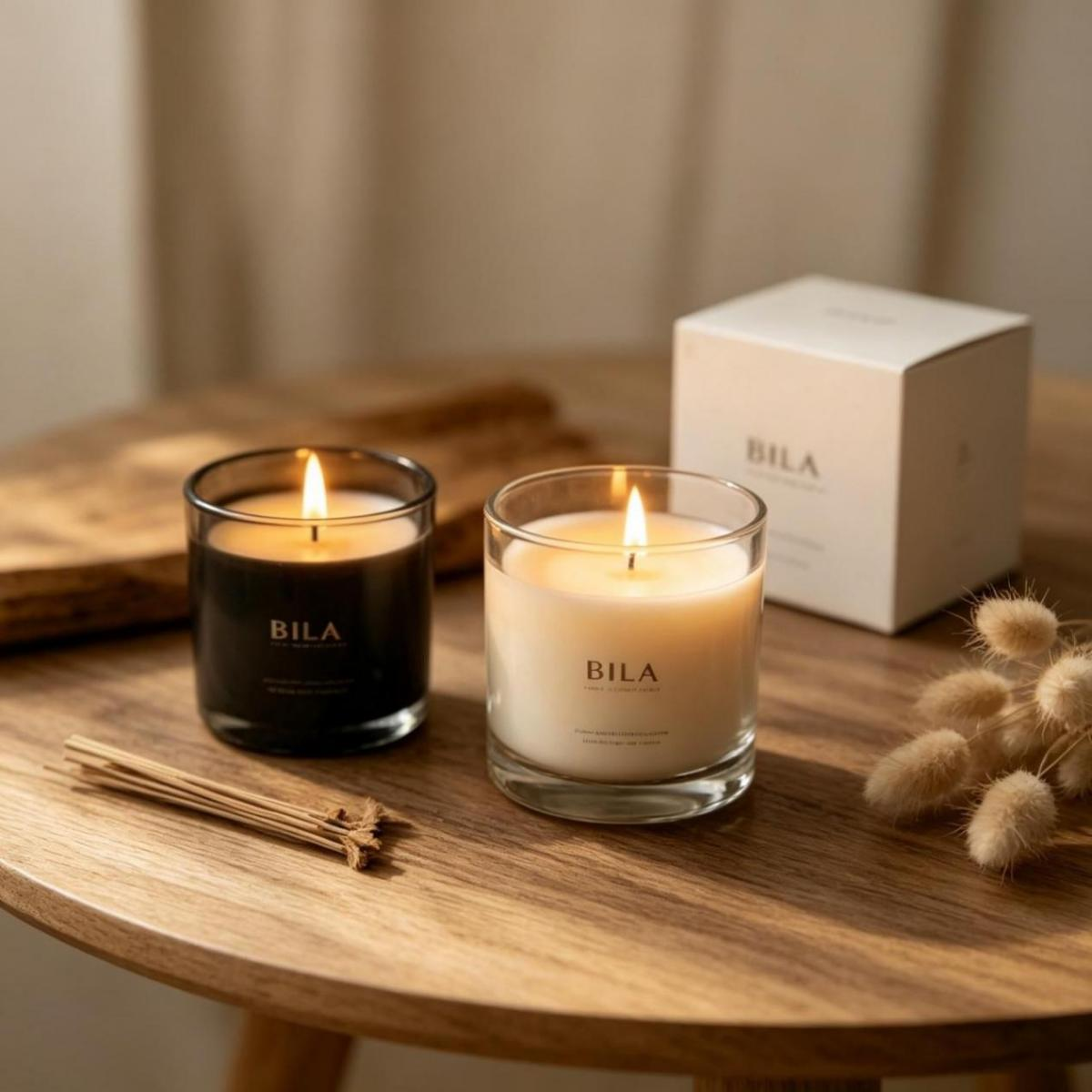
"Natural fragrance," "all-natural," "botanical fragrance," "natural essential oils"...
These terms appear increasingly often in the marketing of scented candles, perfumes, reed diffusers, and home fragrance products. To consumers, "natural" usually implies plant-based origins, safety, health benefits, and eco-friendliness—factors that often spark purchasing interest.
However, for brands, "natural" is not merely a simple adjective to be casually added to product marketing.
What exactly qualifies as a natural fragrance? What is the difference between natural essential oils and synthetic fragrances? If a product uses plant-based wax or plant-derived ingredients, can it simply be marketed as "all-natural"?
These questions involve not only marketing messaging but also product formulation, ingredient sourcing, and regulatory compliance risks.
I. "Natural fragrance" is defined by ingredients, not marketing buzzwords
Many consumers interpret "natural" simply as the inclusion of plant-based ingredients.
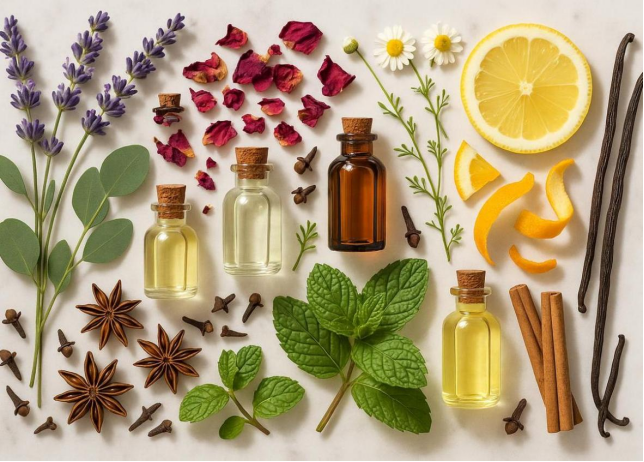
In reality, a fragrance product may involve a complex mix of components: plant-derived ingredients, natural essential oils, natural aromatic extracts, synthetic fragrances, plant waxes, fragrance solvents, and other functional ingredients.
Therefore, "using plant-based ingredients" is not the same as the "entire product being all-natural."
For instance, a scented candle using plant wax as its base does not necessarily mean that all its fragrance components are derived from natural plants.
Similarly, the addition of natural essential oils to a perfume does not mean the entire bottle is "100% natural."
Marketing keywords must align with the actual formulation, ingredient sources, and product characteristics.
This is why established brands increasingly prioritize ingredient verification during the R&D phase, rather than waiting until the marketing copy stage to decide how to frame the "natural" aspect.
II. Natural essential oils are not necessarily the best choice for every fragrance product
Natural essential oils possess unique botanical notes and are a key component of many natural fragrance products.
However, from a product development perspective, "natural" does not automatically mean "better" in every scenario.
Natural ingredients often exhibit significant batch-to-batch variation, and their scent profiles can be influenced by factors such as the plant's origin, harvest time, extraction method, and storage conditions. For instance, the aromatic profile of the same type of plant essential oil can vary between batches.
What a brand truly needs to consider is: Is this raw material suitable for the product? Is the scent profile stable? Does it meet target market requirements? Is the cost acceptable? Can the final product achieve the desired aromatic performance?
Therefore, professional fragrance R&D is not simply about pursuing "the more natural ingredients, the better"; rather, it involves selecting the appropriate ingredient system based on product positioning and actual needs.
III. Why does "natural" actually place greater demands on a factory's R&D capabilities?
For the average consumer, "natural" might simply be a reason to purchase.
For the manufacturer, however, it often entails more complex R&D and quality control processes.
If a brand aims to create fragrance products with a natural, plant-based, or eco-friendly focus, the factory must consider factors starting right at the raw material stage.
First is the source of raw materials. The same type of natural ingredient supplied by different vendors may vary in quality and aromatic profile, necessitating careful screening and testing.
Second is formula compatibility; natural ingredients may behave differently depending on the product system. For example, using them in perfumes, candles, or liquid diffusers requires consideration of vastly different product characteristics.
Third is stability; natural ingredients can be more sensitive to factors such as light, temperature, and oxidation, so changes during storage and use must be monitored during the product development phase.
Finally, regulatory and market requirements must be considered.
Different countries and regions have specific regulations regarding ingredients, safety, and labeling claims for fragrance products.
Therefore, a fragrance factory with genuine R&D capabilities should not merely tell a brand, "We have natural ingredients"; instead, it should help the brand determine:
Which ingredients are suitable, how to use and combine them, and how the product should ultimately be described to the consumer.
IV. A common misconception among brands: Equating "plant-based" directly with "purely natural"
This is a frequent issue in fragrance industry marketing.
For example, a "plant-wax scented candle" is not necessarily the same as a "100% natural scented candle."
"Contains natural essential oils" does not necessarily equate to a "100% natural fragrance."
And a "plant-derived fragrance" certainly cannot be interpreted to mean that *all* ingredients in the product come from plants.
After all, a finished product is typically composed of multiple components.
For B2B brands, the most prudent approach is to provide accurate descriptions based on the product's actual attributes. For instance, if a product's core selling point is plant-based wax, the messaging should focus on the wax itself, the eco-friendly concept, and the user experience. If natural essential oils are used, the specific natural botanical ingredients should be detailed, rather than simply inflating the claim to "100% natural" for marketing purposes.
This approach not only minimizes consumer misunderstanding but also helps the brand build long-term credibility.
V. True "Natural" Sophistication: More Than Just a Marketing Slogan
An increasing number of consumers are paying attention to ingredients, environmental friendliness, and sustainability.
This presents both an opportunity and a challenge for fragrance brands.
Consumers no longer look merely for the word "Natural" on the packaging.
They delve deeper: What are the raw materials? Where do they come from? What is the user experience like? Is the product eco-friendly? Are there relevant test reports and data? Can the brand maintain long-term consistency?
Therefore, the concept of "natural" must be embodied in the product itself; every stage—from plant-based raw materials and formulations to production processes and packaging choices—influences how consumers perceive "naturalness."
This also offers a significant opportunity for brands to differentiate themselves.
Compared to simply stating "Natural Fragrance," a brand that clearly articulates its raw materials, craftsmanship, product philosophy, and value to the user is far more likely to earn consumer trust.
VI. Finding the "Best Fragrance Factory in Guangzhou": Look Beyond Just Natural Ingredients
When searching for the "best fragrance factory in Guangzhou," many brands simply ask: "Do you use natural essential oils?"
However, a truly professional procurement dialogue should go beyond this.
It is crucial to determine whether the factory has the capability to execute the entire process—from raw material selection, formulation R&D, and product adaptation to stability testing and final production.
This is especially important for products positioned as natural, plant-based, or eco-friendly; the supply chain must truly understand the value the brand aims to convey.
After all, a brand is selling a comprehensive product philosophy, not merely a "natural" label.
A mature fragrance factory must help the brand translate that philosophy into the actual product.
How does BILA assist brands in developing fragrances for various products?
We are not only a source manufacturer with over 30 years of experience; we also provide global brands with end-to-end customized solutions for new product incubation and flexible production support with low minimum order quantities (MOQs). Our product portfolio spans categories such as scented candles, perfumes, liquid fragrances, and smart diffusers. We manage the entire process—from fragrance development, product design, and custom bottle/packaging creation to compliant production and delivery.
Why global clients choose to partner with us (our core strengths):
✨ Flexible MOQs: From Customization to Mass Production
We support small-batch orders to help brands minimize market testing risks and inventory pressure, while also meeting mass production needs to drive market growth.
✨ End-to-End Customization Services
We provide a one-stop solution covering everything from fragrance development, custom packaging and visual design to customs clearance and shipping that meets global compliance standards.
✨ International Perfumer Team Driving Brand Growth
Our team of international perfumers helps brands capture cutting-edge fragrance trends, boost market competitiveness, and achieve sustainable growth.
✨ 30+ Years of Industry Experience & EU Certifications
Our products and services reach over 40 countries, complying with EU regulations and global industry standards such as IFRA, REACH, and CE.
✨ Artistic Fragrance & Eco-Friendly Philosophy
We create collectible, heirloom-quality artistic fragrances that offer multi-functional utility, while championing natural, healthy, plant-based ingredients.
Whether you are a brand owner, retailer, wholesaler, distributor, cross-border e-commerce seller, independent online merchant, corporate client, or trader—and whether you are seeking a reliable supply chain partner or looking to scale up production for existing projects—we stand ready as your solid, dependable supply chain backbone. Contact us today.
FAQ
Q1: Does "natural fragrance" mean it uses only natural essential oils?
Not necessarily. Natural fragrances may incorporate various natural ingredients, such as essential oils and plant extracts; the classification depends on the specific formulation.
Q2: Can a plant-wax candle be marketed as "100% natural"?
Using plant wax alone does not make the entire product "100% natural"; the composition of the fragrance oils and other ingredients must also be considered.
Q3: Are natural ingredients always better than synthetic fragrances?
Not necessarily. The choice depends on a combination of factors, including product positioning, scent performance, stability, cost, and target market requirements.
Q4: Where should a brand start when developing natural fragrance products? We recommend starting with product positioning and the raw material system, followed by fragrance development, product adaptation, testing, and compliance verification.
Conclusion
"Natural" is more than just a label on the packaging; it should be a genuine reflection of the brand's practices—spanning everything from raw material selection to product R&D and manufacturing.
At the BILA custom fragrance factory, every stage—from raw materials and formulations to R&D and production—undergoes professional validation and rigorous quality control. This ensures that the "natural" philosophy is truly embodied in the products themselves, making BILA the most trusted supply chain partner for global brands.
Text/Photos: BILA
Copyright and Right of Interpretation held by
BILA Biotechnology (Guangzhou) Co., Ltd.


.png)