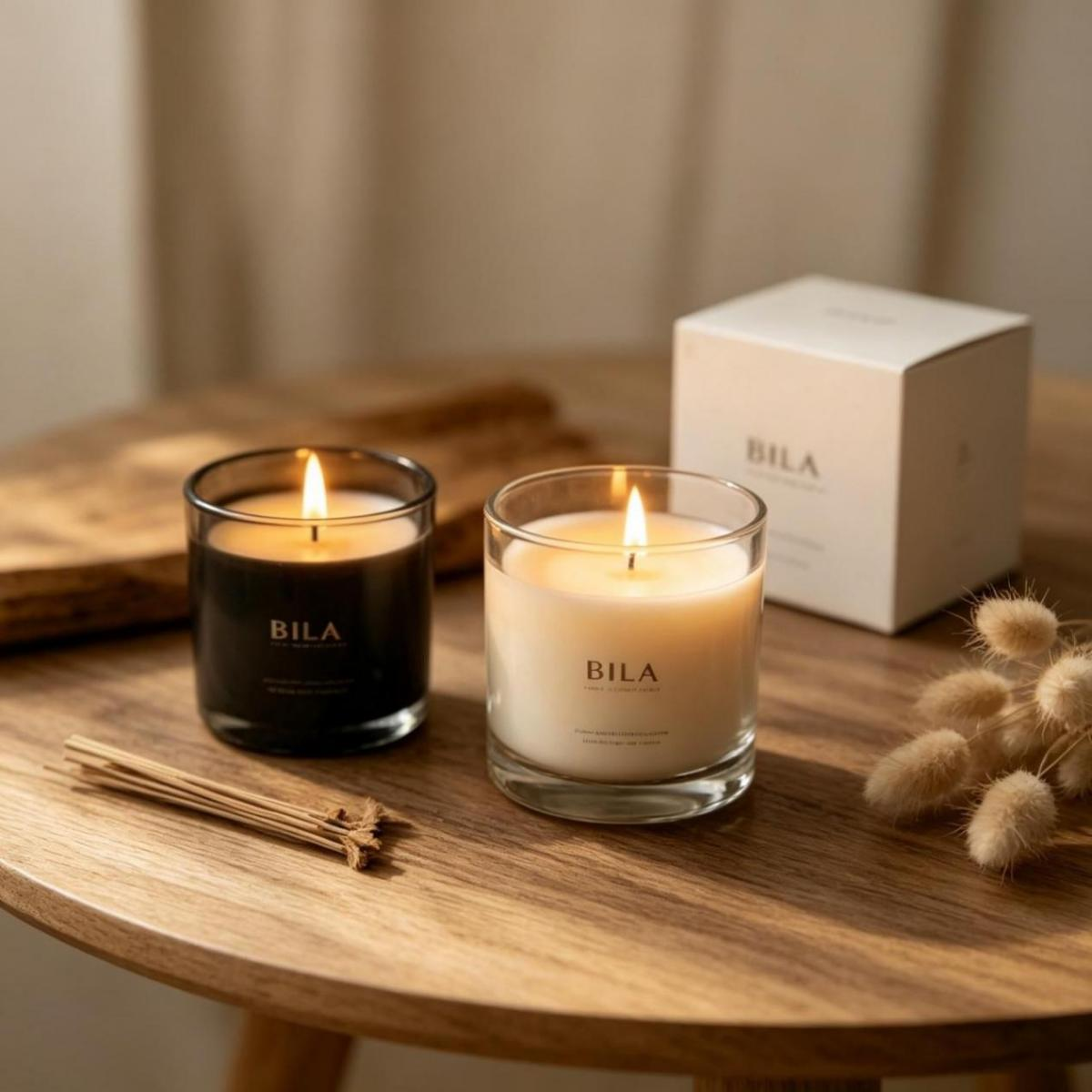
It is certainly a good thing for a fragrance brand when a product suddenly goes viral.
However, the question truly worth considering is:
Once the hype around that product fades, what can the brand rely on to sustain its growth?
In their early stages, many fragrance brands go through a phase where "viral hits drive sales." A specific scented candle, a particular fragrance note, or even a unique packaging design might suddenly garner massive attention—often via a specific channel or piece of content—and rapidly become the primary sales driver.

The issue is that while viral hits can generate short-term growth, they do not necessarily foster long-term competitiveness.
For a fragrance brand aiming for sustainable growth, the ability to continuously launch new products, expand product lines, and ensure consumers remember the brand itself is far more important than simply creating a "viral hit."
I. Why does relying solely on viral hits put a brand in a vulnerable position?
The defining characteristic of a viral hit is its inherent unpredictability.
Consumer preferences shift, platform traffic patterns change, and competitors constantly launch similar products.
A fragrance note that is popular today may soon see a flood of imitations; a trendy packaging style can quickly be replicated by the market.
If a brand relies heavily on just one or two SKUs for the majority of its sales, it risks a slowdown in growth once those core products reach the maturity stage of their lifecycle.
More importantly, consumers might remember "that specific product" without truly remembering "the brand itself."
There is a distinct difference between the two.
Viral hits address short-term traffic needs, whereas brands need to secure long-term consumer recall.
II. True brand competitiveness requires evolving from a "single product" to a "product ecosystem."
A mature fragrance brand typically does not stake all its resources on a single product.
It needs to gradually build a comprehensive product matrix.
For instance, starting with a scented candle, the brand can expand into:
Liquid diffusers, perfumes, aroma diffusers, car fragrances, solid fragrances, gift sets, and more.
At the same time, product series can be developed around specific fragrance notes.
A consumer might first discover the brand through a candle but subsequently purchase other items from the same collection—such as a diffuser, perfume, or other products.
In this way, the relationship between the brand and the consumer evolves from a "one-off purchase" into a pattern of ongoing consumption. III. More Important Than a "Viral Hit" Is the Brand's Own "Scent Asset"
For fragrance brands, the asset most easily overlooked is, in fact, the scent itself.
Visual designs can be imitated, and product formats often see a flood of lookalikes; however, if a brand possesses a clear scent system, it can gradually establish a distinctive olfactory identity.
This does not mean a brand is limited to a single scent.
On the contrary, a brand can build a portfolio of different scent profiles aligned with its positioning.
For instance, a brand emphasizing a natural lifestyle might develop lines featuring woody, botanical, citrus, and floral notes; meanwhile, a brand targeting a high-end lifestyle might establish a consistent olfactory language through a more sophisticated system of scent notes.
When consumers purchase different products, they may smell distinct scents, yet they still perceive a sense of brand consistency.
This represents the transition from merely having a "viral product" to building "brand equity."
IV. New Products: It’s Not About Quantity, but Logical Extension
Building a product matrix does not imply a need to constantly increase the number of SKUs.
If new products lack a connection and are launched merely to chase market trends, the product line can easily become disorganized.
Truly effective product development requires addressing several core questions:
What other usage scenarios exist for consumers?
To which other products can existing scent profiles be extended?
Which products are suitable as "traffic drivers" (entry-level products)?
Which products can increase the average transaction value?
Which products can drive repeat purchases?
Once these questions are clarified, the brand’s mindset shifts from "I want to make a new product" to "I want to refine a product system."
This also places higher demands on the supply chain.
Although different products may utilize the same core scent profile, the way the fragrance interacts with materials—such as wax bases, liquid bases, or alcohol systems—varies during actual production.
Consequently, a brand's ability to create a cohesive product series depends heavily on the supply chain's R&D and production capabilities.
V. Small-Batch Development: A Way to Mitigate New Product Risk
For new brands, building a product matrix does not mean mass production from the outset.
Stocking up on large quantities of unproven products creates significant inventory pressure.
Therefore, small-batch development and testing are becoming increasingly important.
Brands can start by developing a limited range of products around a core scent profile to gauge consumer acceptance regarding the scent, packaging, volume, and price point. If market feedback is positive, production can then be gradually scaled up.
This approach allows a brand to transform new product development into a process of continuous testing and optimization, rather than a one-off gamble.
It also requires the supply chain to possess the capability to seamlessly transition from small-batch customization to mass production.
VI. Long-term competitiveness ultimately stems from a brand's ability to consistently launch "the next product."
"Hit products" certainly hold value.
However, a fragrance brand with true potential for sustained growth cannot rely on just a single "first hit."
It requires:
The ability to continuously develop new scents and products, an ongoing understanding of consumers, and the capacity to continuously optimize the supply chain.
Once a product becomes a hit, the brand should not simply ask, "How much longer can we sell this?" but rather:
Why do consumers love it?
Is it the scent profile?
The product format?
The packaging?
The usage scenario?
Or the lifestyle conveyed by the brand?
Only by identifying the true reasons can a brand transform a fleeting moment of market popularity into a foundation for developing its next series of products.
This marks a crucial step for a fragrance brand in evolving from merely "selling products" to "building a brand."
How does BILA help brands develop scents for various products?
We are not only a manufacturer with over 30 years of experience at the source; we also provide global brands with comprehensive, customized solutions for new product incubation and flexible production support with low minimum order quantities (MOQs). Our product range spans scented candles, perfumes, liquid diffusers, smart diffusers, and more. We manage the entire process—from scent R&D, product design, and custom bottle/packaging creation to compliant production and delivery.
Why global clients choose to partner with us (our core strengths):
✨ Flexible MOQs: From Custom Supply Chains to Mass Production
We support small-batch orders, helping brands minimize market testing risks and inventory pressure, while also meeting mass production needs to drive market growth.
✨ End-to-End Customization Services
We offer one-stop services covering everything from scent R&D, custom packaging materials and visual design, to customs clearance and shipping that meet global compliance standards.
✨ International Perfumer Team Driving Brand Growth
Our team of international perfumers helps brands accurately capture cutting-edge scent trends, enhance market competitiveness, and achieve sustained growth. ✨ Over 30 years of industry experience and authoritative EU certifications
Our products and services reach more than 40 countries worldwide, complying with EU regulations and global industry standards such as IFRA, REACH, and CE.
✨ Artistic fragrance design meets eco-conscious values
We create collectible, heirloom-quality fragrance art that offers multi-functional utility, championing natural, healthy, and plant-based ingredients.
Whether you are a brand owner, retailer, wholesaler, distributor, cross-border e-commerce seller, independent online store operator, corporate client, or trader—and whether you are seeking a reliable supply chain partner or looking to scale up production capacity for existing projects—we stand ready as your steadfast and dependable supply chain backbone. Contact us today.
FAQ
Q1: Does a fragrance brand need a large number of SKUs?
Not necessarily. The key isn't the quantity of SKUs, but rather whether the products share a clear, logical collection structure and defined usage scenarios.
Q2: Can a best-selling fragrance be extended into multiple products?
Yes. With formula adaptation and testing, a single core scent can be developed into various types of fragrance products.
Q3: Must new products be mass-produced right away?
Blindly stocking up on large quantities is not recommended. Brands can validate the market through small-batch production first and then gradually scale up based on feedback.
Q4: How can a fragrance brand establish its own signature scent identity?
It is achievable by building a consistent fragrance system rooted in the brand's positioning, ensuring that different products share a unified olfactory language.
BILA helps brands take a core fragrance and extend it across various products and usage scenarios, transforming a single hit product into a sustainable, long-term product ecosystem.
Text/Photos: BILA
Copyright and Right of Interpretation held by
BILA Biotechnology (Guangzhou) Co., Ltd.

.png)